New England Landmark Realty covers the Vermont real estate market 

from the inside — market data, buyer strategy, seller timing, land 

use regulation, and the policy decisions shaping what homes cost and 

who can afford them.


Tony Walton has been working Vermont real estate since 1978. 

The analysis here reflects that depth.


Browse by topic below, or use the search to find what you need.

March 21, 2026

Ice Dams and Spring Water Damage: What Vermont Homes Are Hiding Right Now

The Inspector’s Log — Vermont Home Systems & Risk Translator
 New England Landmark Realty (NELR)  |  March 6, 2026  |  Jump to Key Takeaways

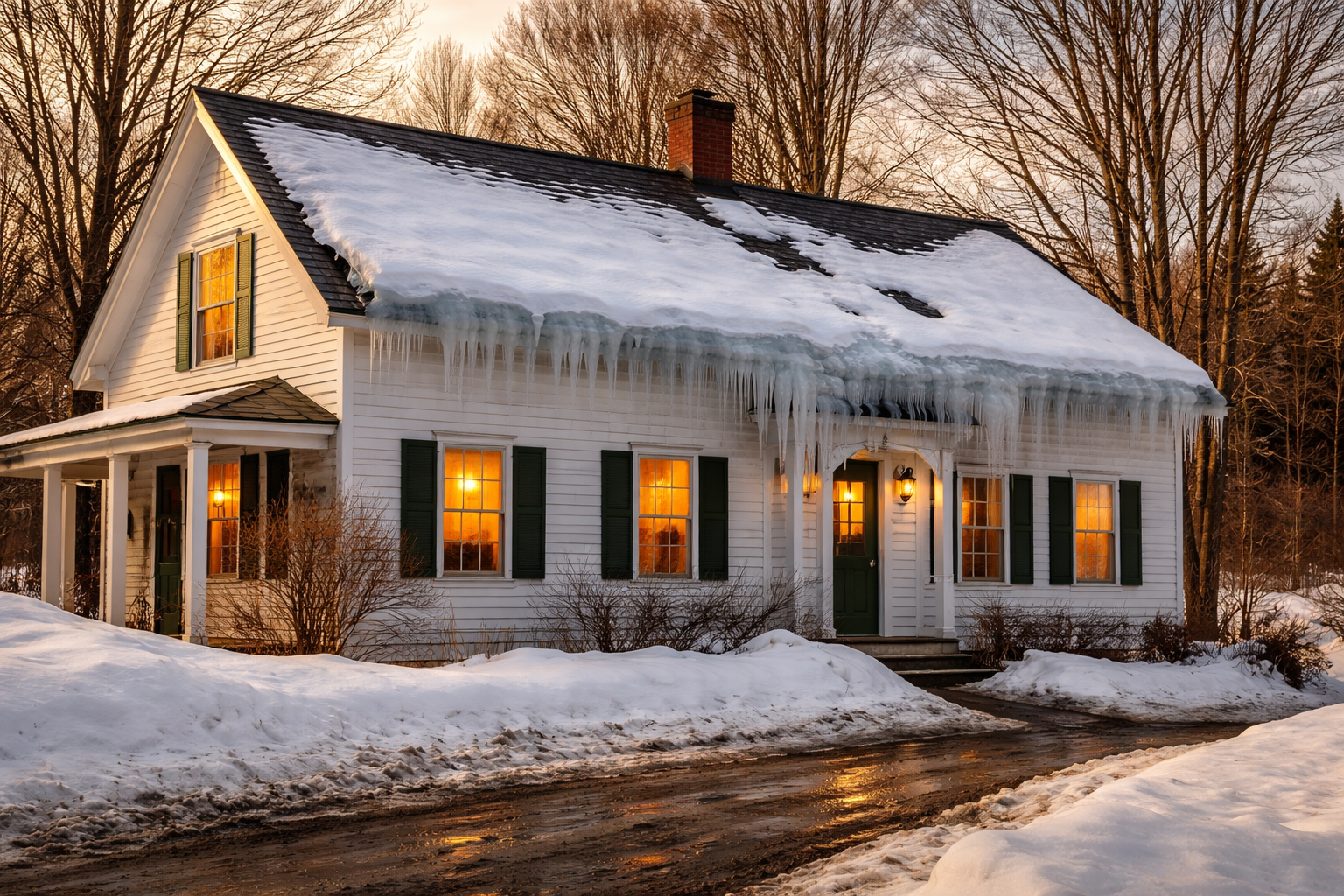
Vermont farmhouse with large ice dam along the eave edge in late winter early spring conditions

A classic Central Vermont scene: heavy ice dam loading the eave edge, icicles masking the water intrusion already working its way under the shingles.

Key Takeaways — Read This First

Two-Sentence Summary

Ice dams are a Vermont winter fixture, but the real damage — soaked insulation, rotted sheathing, stained ceilings, compromised air barriers — does not announce itself until the snow pulls back and mud season sets in. If you bought, sold, or currently own a Vermont home that carried roof ice this winter, the next four weeks are your window to catch it before minor moisture becomes a major repair bill.

If You Only Do 3 Things

  • Get into the attic now — before the heat of spring masks the moisture staining, compressed insulation, and daylight gaps that ice dam intrusion leaves behind.
  • Walk the roofline from the ground — look for lifted or missing shingles, staining on fascia boards, and soft spots in the soffit; these are the fingerprints of water that found a way in.
  • Check every exterior wall below a roof valley or eave — press the drywall, look at the baseboard paint, smell for mustiness; ice dam water travels further inside a wall cavity than most homeowners expect.

The Walkthrough Moment

You are standing in a Vermont living room in early March. The ceiling has a faint brown ring — about the size of a dinner plate — directly below the roofline. The seller says it is old. Maybe it is. But right now, with ice still on the eaves and mud season a week away, that stain is a question that needs an answer before you sign anything — or before you list.

Here’s what I see in Vermont homes every single spring: the ice dam forms quietly over January and February. The icicles look almost decorative. Nobody goes in the attic. Nobody presses the drywall. And then the snow pulls back in March and April, and suddenly there is a water stain on the ceiling, a soft spot in the sheathing, insulation that looks like a wet sponge, and a repair bill that could have been caught for the cost of an hour and a flashlight.

This is not a catastrophe article. Ice dam damage is common in Vermont, it is well understood, and the fix ladder is clear. But the window to act — before moisture drives deeper into cavities, before mold gets established, before a buyer’s inspector finds it on the table instead of you finding it first — is right now.

What You Are Really Looking At

An ice dam is a ridge of ice that forms at the eave edge of a roof when heat escaping from a warm attic melts snow on the upper roof surface, the meltwater runs down to the cold overhang, and refreezes. The backed-up water has nowhere to go except under the shingles — and once it is under the shingles, it is inside your house. In Vermont, where a single winter can deliver a dozen freeze-thaw cycles, this process repeats all season long.
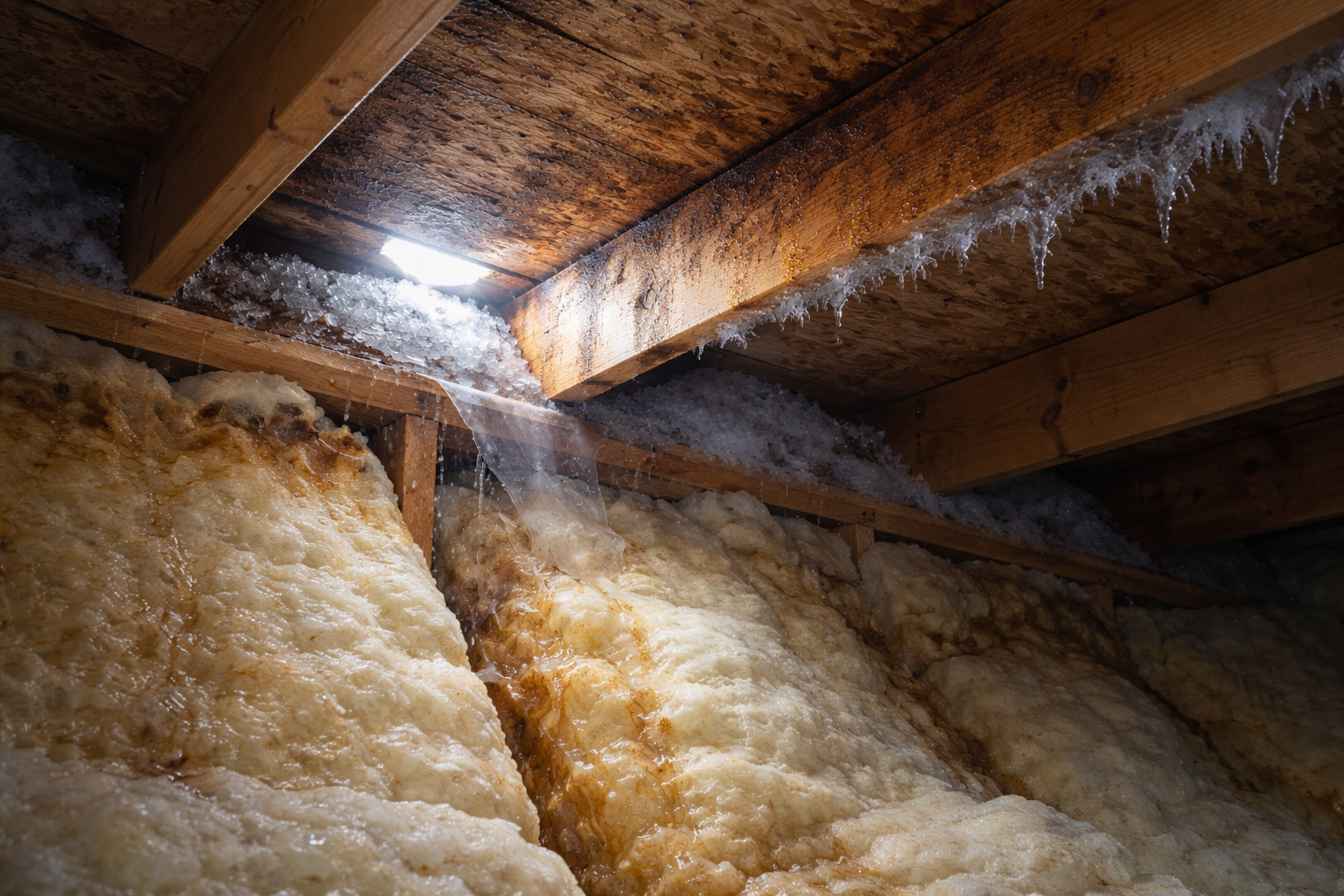
Vermont attic showing water staining on roof sheathing, compressed insulation, and early mold growth from ice dam water intrusion

This is what ice dam intrusion looks like from the inside: stained sheathing, saturated insulation, and the early signature of mold. Most homeowners never see this until a home inspector does.

The Failure Sequence

Symptom: Brown ceiling stain, dripping during thaw, frost on attic sheathing, soft fascia board, peeling interior paint near exterior walls.

Cause: Heat loss through an under-insulated or poorly air-sealed attic floor warms the roof deck, melts the snowpack, and sends water downhill to the frozen overhang where it backs up under the first course of shingles.

Consequence: Water intrudes into the insulation layer, the roof sheathing, the wall cavity, and in persistent cases, the ceiling drywall. Saturated fiberglass batt insulation loses most of its R-value. Wet sheathing begins degrading. If the moisture persists through mud season without drying out, mold can establish in as little as 48 to 72 hours under the right temperature and humidity conditions.

What it is not: Ice dams are not a roof failure in themselves. They are a building-science symptom — a signal that the attic thermal boundary is not doing its job. Fix the boundary, and the ice dams stop forming.

Where to Look

  • Attic sheathing at the eave end — look for dark staining, frost, soft spots
  • Top of exterior walls in the attic — compressed or discolored insulation at the perimeter
  • Ceiling directly below the eave — any brown ring or soft drywall
  • Fascia boards and soffits from outside — staining, rot, paint failure
  • Interior walls below roof valleys — bubbling paint, mustiness at baseboard level

Why Vermont Amplifies It

Vermont’s climate does not give ice dam damage a chance to dry out between events. A Central Vermont winter delivers repeated freeze-thaw cycles from November through March, heavy snowpack that can sit on a roof for weeks, and old housing stock — much of it built before modern insulation and air-sealing standards — that was never designed to hold heat at the attic floor. The result is a state where ice dam damage is not an outlier. It is a pattern.

The physics are straightforward. Vermont homes — particularly pre-1980 farmhouses, cape cods, and colonials — were built when heating fuel was cheap and attic insulation was an afterthought. Many have R-11 or less in the attic floor when current best practice for Central Vermont is R-49 to R-60. That gap in thermal resistance is exactly what feeds an ice dam: heat rises, escapes through the attic floor, warms the roof deck, melts the snow, and the cycle begins.

Compound that with Vermont’s roofline geometry. Steep pitches, dormers, skylights, roof valleys, and cathedral ceiling sections all create thermal irregularities — spots where heat escapes unevenly and ice concentrates. A home that looks fine from the street can have three or four distinct ice dam zones working simultaneously on the back side.

And then mud season arrives. Ground saturation is already high. Basement moisture is already elevated. The last thing a Vermont home needs in April is additional water migrating down through a compromised roof assembly into wall cavities that have no path to dry. That is when a manageable repair becomes a significant one.

The Fix Ladder

Ice dam remediation runs three levels: immediate damage control, professional removal and assessment, and the permanent building-science fix that stops ice dams from forming again. Most Vermont homeowners stop at level one or two and find themselves back in the same conversation the following March. The permanent fix — air sealing the attic floor plus adequate insulation — is the only one that actually ends the cycle.
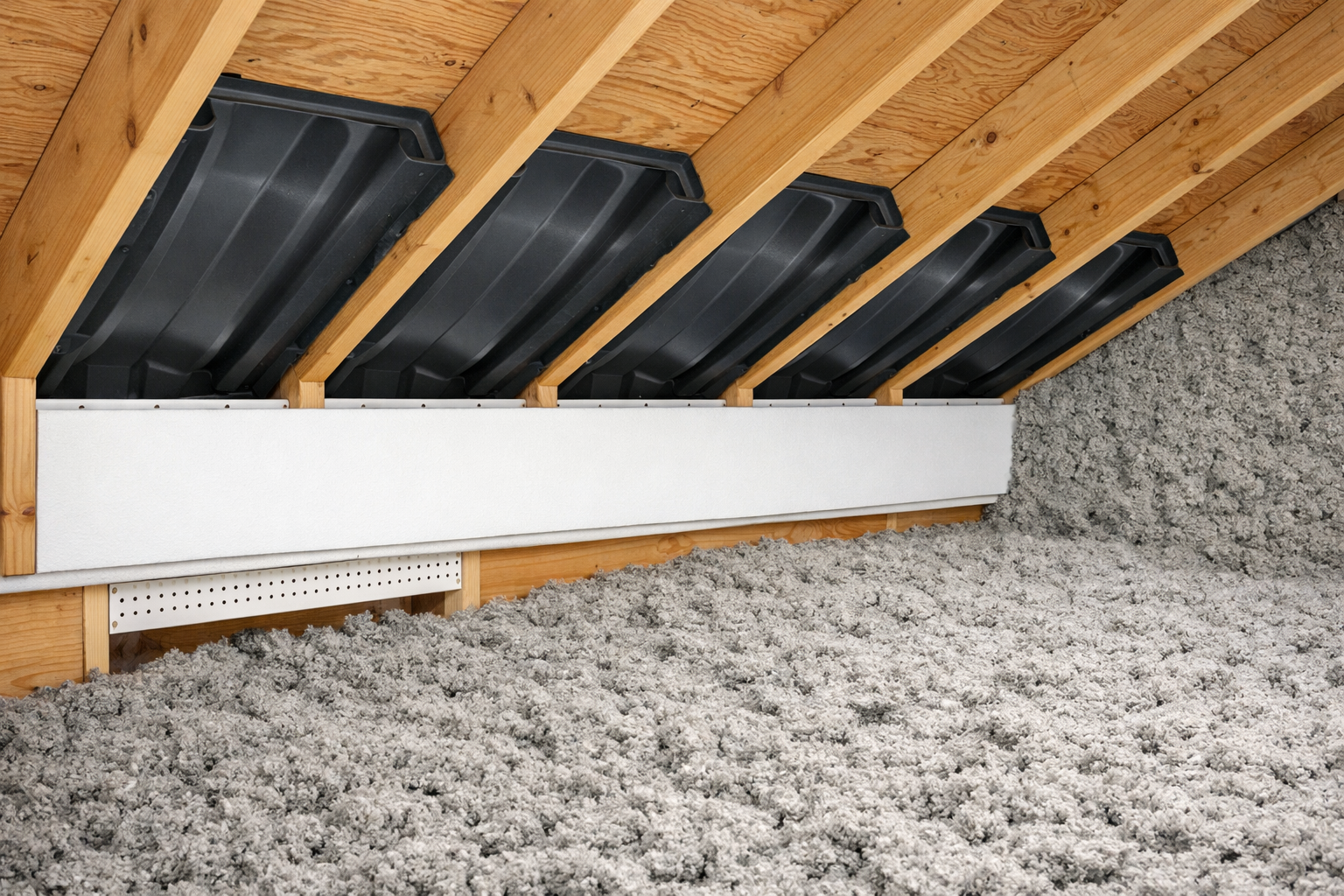
Properly insulated and ventilated Vermont attic showing rigid foam air barrier at eave, ventilation baffles, and dense-pack insulation as the correct ice dam prevention solution

The correct fix: a continuous air barrier at the attic floor, adequate insulation depth, and preserved ventilation channels from soffit to ridge. This keeps the roof deck cold and uniform — no warm spots, no melting, no ice dam.

Level 1: Immediate / DIY

Typical cost: $0 to $150 in materials

  • Use a roof rake to pull snow back from the lower 3 to 4 feet of the roof after each significant storm — this removes the fuel for ice dam formation
  • Do not chip at existing ice with a hammer or ice pick; you will damage shingles and create new entry points for water
  • Lay calcium chloride ice melt in a nylon stocking across the ice dam perpendicular to the eave — this creates a channel for meltwater to drain (do not use rock salt; it damages shingles and vegetation)
  • Inside: place buckets, note the stain location precisely for your inspector or roofer, photograph everything
And as always — if you are getting on a ladder in winter conditions, use a spotter, wear non-slip footwear, and keep your weight below the eave. Roof work in ice and cold is where serious injuries happen. If you are not comfortable doing that, this is exactly the right place to bring in a pro.

Level 2: Professional Removal and Assessment

Typical cost: $400 to $1,500 depending on roof size and access (estimate only; not a bid)

  • Low-pressure steam removal is the professional standard in Vermont — it removes ice without shingle damage; avoid contractors who use pressure washers or chipping
  • Once ice is removed, have a roofer assess shingle condition at the eave, inspect the first two courses for lifted nails, and check the ice-and-water shield (if present) for breaches
  • Follow with an attic inspection — a home inspector or energy auditor can assess insulation condition, air sealing deficiencies, and sheathing moisture with a moisture meter
  • If moisture readings in the sheathing exceed 19 percent (approximate threshold for mold risk), the assembly needs to dry before any repair work begins

Level 3: The Permanent Fix

Typical cost: $2,500 to $8,000+ depending on attic size, access, and existing conditions (estimate only; not a bid)

  • Air seal the attic floor first — this is the step most contractors skip and the reason ice dams return; every penetration (plumbing stack, electrical box, recessed light, partition wall top plate) needs to be foam-sealed before adding insulation
  • Bring insulation to R-49 minimum at the attic floor — dense-pack cellulose or open-cell spray foam are the typical Vermont choices; both have good performance in cold climates
  • Preserve ventilation channels — baffles must be installed at every rafter bay from soffit to ridge to maintain airflow; insulation that blocks soffit vents creates moisture problems of its own
  • Efficiency Vermont offers rebates for attic insulation and air sealing work that can offset a meaningful portion of the project cost — worth verifying current program availability before contracting
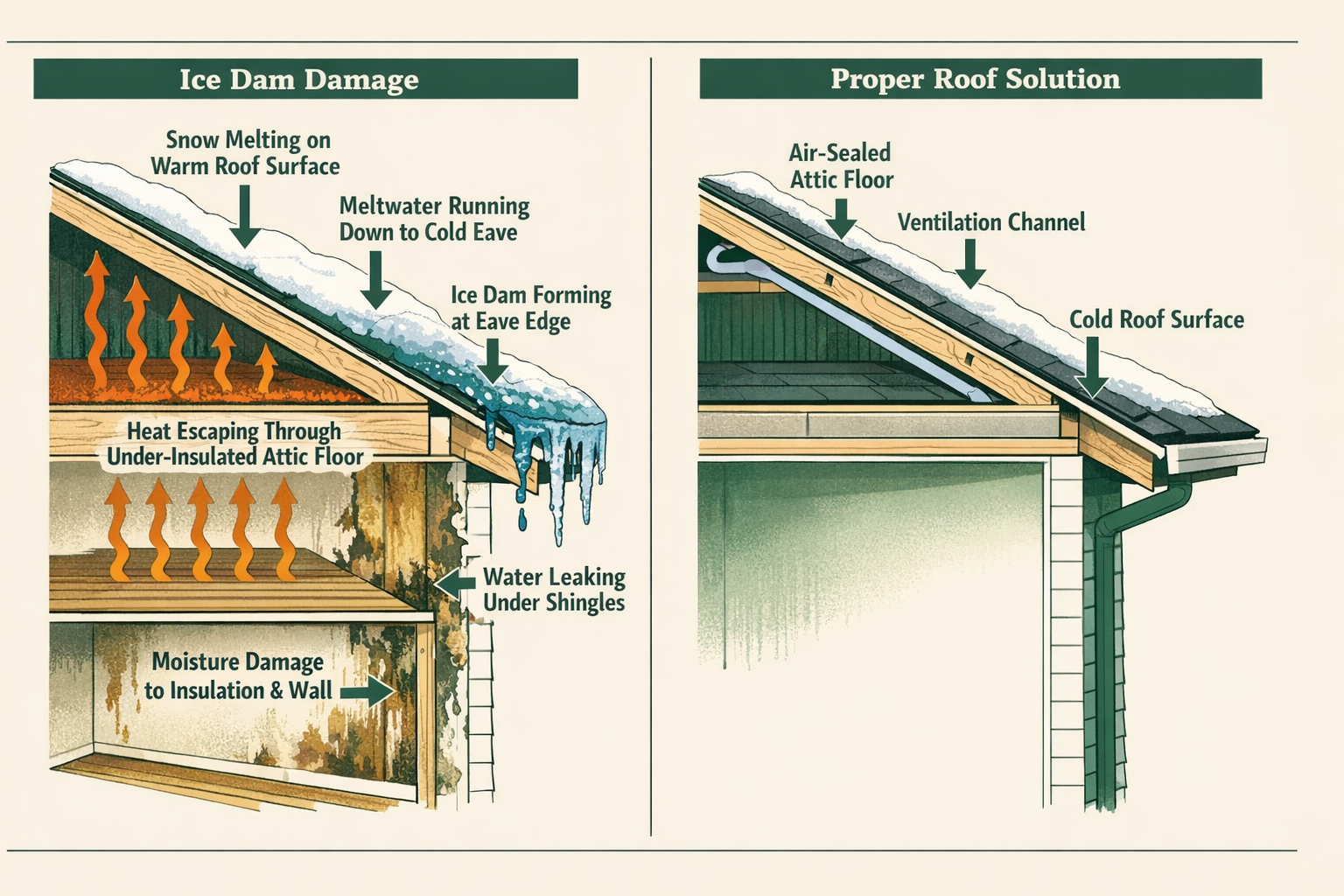
Cutaway diagram showing ice dam formation sequence on left with heat loss, snowmelt, ice dam, and water intrusion labeled, and correct insulation and ventilation solution on right

Left: the failure sequence — heat escapes, snow melts, ice dams form, water backs up under shingles. Right: the solution — a cold, uniform roof deck maintained by proper air sealing, insulation, and ventilation.

Buyer vs. Seller Checklist

Ice dam history is a legitimate and common disclosure issue in Vermont real estate transactions. Buyers need to know what to look for and what to ask. Sellers who get ahead of it — with documentation, a completed repair, or a clear-eyed disclosure — come out ahead of the ones who leave it for the inspection table. Neither side benefits from surprises in April.

If You Are Buying

  • Ask the seller directly: has the home had ice dam issues? Any ceiling stains, attic moisture, or roof repairs in the last five years?
  • Schedule your home inspection to include an attic inspection — not all inspectors go into attics by default; confirm this is in scope
  • Ask your inspector to use a moisture meter on attic sheathing at the eave end — readings above 19 percent are a flag
  • Look at the ceiling directly below the roofline in every room — faint brown rings, paint discoloration, or wavy drywall tape are all evidence of past water intrusion
  • Press the drywall on exterior walls below roof valleys and dormers — any softness warrants investigation
  • Ask for any Efficiency Vermont energy audit reports — these will document insulation levels and air sealing deficiencies directly
  • If damage is found: request a repair or a credit; do not accept verbal assurances that “it dried out” without a moisture meter reading to confirm

If You Are Selling

  • Get into the attic before you list — find the staining, compressed insulation, or sheathing damage yourself before the buyer’s inspector does
  • If you have had ice dam issues, document what was done: dates, contractors, materials, any receipts
  • A pre-listing energy audit from Efficiency Vermont is a strong move — it gives you documented insulation levels and positions you as a transparent seller
  • Repair lifted shingles and damaged fascia before listing — these are visible from the street and will come up in every showing
  • If the attic has moisture damage, dry it out and remediate before listing; wet wood smell in an attic is one of the fastest ways to lose a buyer at inspection
  • Disclose known ice dam history — Vermont’s disclosure requirements are real, and a proactive disclosure with a completed repair is far stronger than a discovered problem

Bottom Line

Ice dam damage is one of the most common and most manageable issues in Vermont residential real estate — but only if you find it before mud season drives moisture deeper into the assembly. The order of operations is simple: look now, document what you find, act at the right level, and get the permanent fix on the schedule. Every week you wait is a week the moisture has to travel further.

This is a pretty common problem in Vermont. I have walked through it in hundreds of homes across Washington, Lamoille, and Chittenden Counties. The good news is that the failure mode is well understood, the fix ladder is clear, and most ice dam damage — when caught in the spring thaw window — is entirely solvable without a gut renovation.

What turns a manageable problem into an expensive one is time. Not the ice. The waiting.

Get in the attic. Take the flashlight. Look at the sheathing, press the insulation, check the moisture. If you are not comfortable doing that, or if you want a second set of eyes on what you find — that is exactly the conversation New England Landmark Realty (NELR) is set up to have. Send us the inspection report. We will translate it.

Got an Inspection Report? We’ll Translate It.

Found something in the attic and not sure what it means? Buying or selling a Vermont home and want a straight read on what the inspector found? Tony Walton and the New England Landmark Realty (NELR) team will triage what matters — no upsell, no alarm, just clarity.

www.nelandmark.com

Where to Go Next

© 2026 New England Landmark Realty (NELR)  |  nelandmark.com  |  (802) 253-4711  |  Washington, Lamoille & Chittenden Counties, Vermont

March 18, 2026

Vermont's 802 Homes Catalog: Free Plans, Real Shortcut — And What It Still Can't Do For You


Blueprint: Vermont Design & Build  ·  New England Landmark Realty

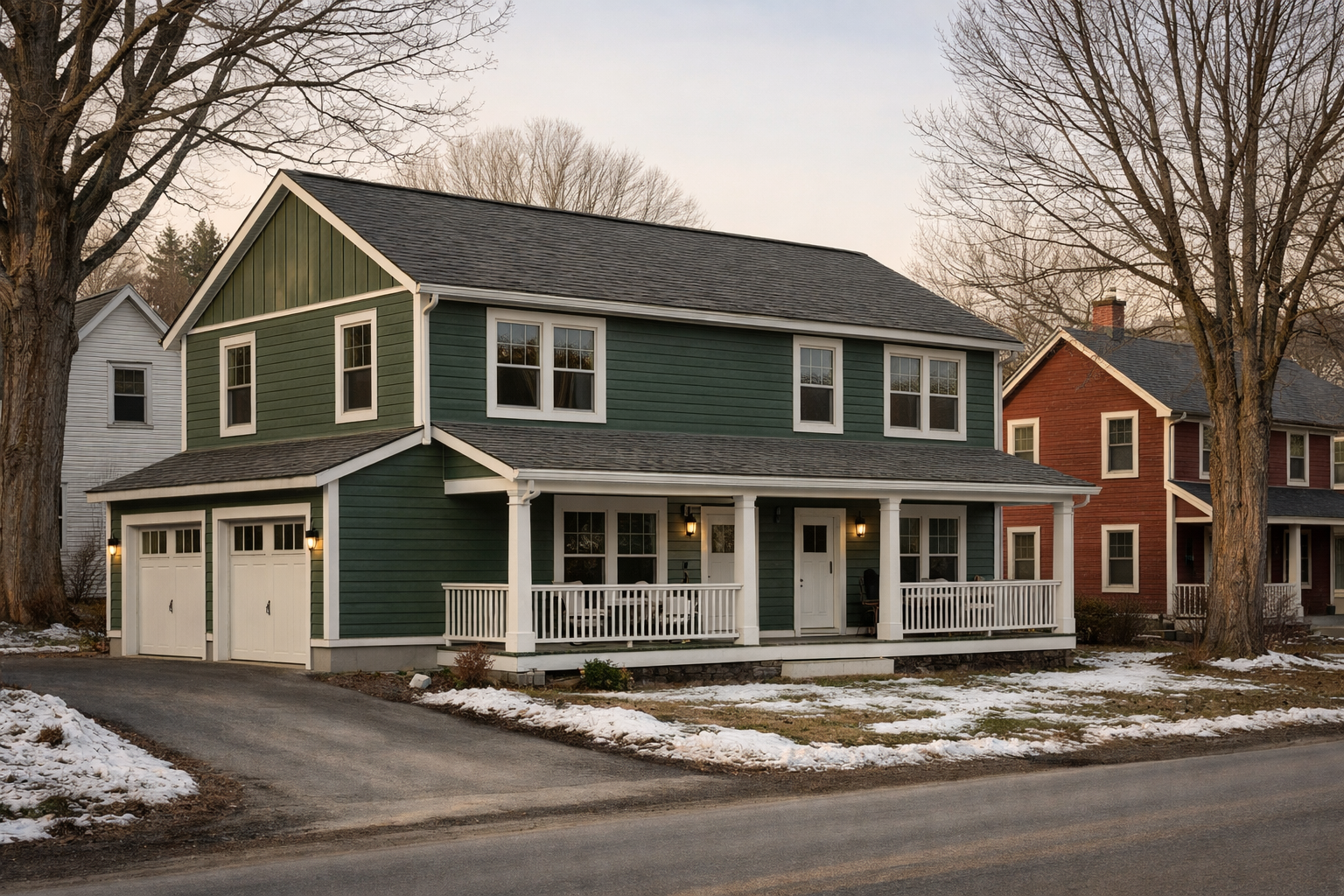
A well-proportioned duplex nestled on a Vermont village street — the kind of missing middle housing the 802 Homes catalog is designed to produce
Missing Middle Housing in Vermont: duplexes and cottage-over-garage designs built to fit existing neighborhoods — exactly the typology the 802 Homes catalog targets. The design question isn't whether it looks good. It's whether the ground beneath it cooperates.

Two-Sentence Summary

Vermont's new 802 Homes catalog offers 10 free, pre-vetted home designs — duplexes, ADUs, and small multi-units — engineered to fast-track local permitting in pilot communities Essex Junction, Hartford, and Manchester. The plans are a genuine shortcut through design review, but they don't touch the four things that actually determine whether your project gets built: site engineering, soil and drainage conditions, trades availability, and construction financing.

If You Only Do 3 Things

  1. Call your local zoning administrator now. Find out whether your municipality qualifies as a 802 Homes "development-ready" partner before spending a dollar on design work.
  2. Budget for what the catalog doesn't cover. Soil tests, frost-depth engineering, utility connections, and a builder who has actually priced a catalog build are all still entirely on you.
  3. Match the tool to your land. These designs are built for infill lots in existing neighborhoods — not rural acreage, steep-slope parcels, or off-grid sites. Know what you own before you get excited.

Why This Matters: Vermont Is 22,000 Homes Short and Counting

Direct Answer

Vermont needs 24,000+ new year-round homes by 2029 but builds barely 2,000 a year — roughly a quarter of what the state's own housing commissioner says is needed. The 802 Homes catalog is Vermont's most concrete policy response yet: free, pre-permitted design plans for small-scale developers and property owners who want to add housing without hiring an architect and surviving a three-board approval gauntlet.

The math is tough and it isn't moving. Vermont permitted just 2,654 housing units last year. Experts say the state needs 7,500 or more annually just to stabilize the market. The median price of a newly-built home hit nearly $625,000 in 2024, according to Vermont housing data. Renters, workforce households, and young families are running the calculation and leaving.

For anyone who owns a parcel or is thinking about building, this gap is both a problem and an opportunity. The wall between "I want to add a unit" and "shovels in the ground" has historically been formidable: hire an architect, survive design review, satisfy local boards, revise, wait, resubmit. The 802 Homes catalog is Vermont's attempt to knock that wall down — or at least install a door.

That's worth paying attention to. Even if your parcel isn't in a pilot community today, the statewide version is coming. Understanding how this program works now is how you position yourself to use it when it does.


The Principle: What "Pre-Vetted" Actually Means (And What It Doesn't)

Direct Answer

Pre-vetted means the design has been reviewed and approved within the local design review process in the three pilot communities — not that it's cleared for your specific lot. Think of it as a green light for the architectural drawings. The civil engineering, site conditions, and your town's individual quirks are still your homework. The state paid design firm Utile $500,000 to build 10 "Missing Middle" plan sets that any property owner can then download for free.

Missing Middle Housing (MMH) — the design category between the large single-family home and the 50-unit apartment complex — is exactly what Vermont lacks and exactly what these plans deliver. The 10 catalog types include accessory dwelling units (ADUs), cottage apartments above garages, duplexes, townhomes, and buildings up to four units. All are designed to look like they already belong in a Vermont village or neighborhood. No glass towers. No suburban-beige awkwardness. The brief was Vermont character, and the architects took it seriously.

The designs support both traditional stick-built construction (platform framing — the way most Vermont carpenters have built for generations) and modern off-site methods: modular, panelized, and pod-based assembly. Translation: you can build these with a local crew or on a factory floor. That flexibility is the program's most underappreciated feature.

Gov. Phil Scott has asked the legislature to expand 802 Homes statewide via H.602, effectively giving catalog designs state-preemption in local zoning codes. That bill is active. Watch it.


Vermont Reality Check: Free Plans Are a Starting Line, Not a Finish Line

Direct Answer

Free plans mean free design drawings — not free engineering, free permitting outside pilot towns, or a free builder waiting by the phone. Vermont construction runs $250–$400 per square foot for standard builds, with custom work pushing $600+. The state targets $450,000 per unit through the catalog, achievable only with the simplest designs, modular construction, and a genuinely cooperative site. Most Vermont parcels don't start there.

Here is what the catalog does not cover — and what you still own entirely:

Geography of availability. Right now, the program lives in three communities: Essex Junction, Hartford, and Manchester. The catalog itself won't even be finalized until the end of 2026. If your land isn't in one of those towns, you're watching from the sideline — usefully, but from the sideline. Statewide expansion requires H.602 to pass.

Site engineering. Every parcel in Vermont still needs a soil test, a percolation test (perc test — measuring how fast water drains through soil, which determines septic viability), frost-depth calculations (Vermont's ground freezes to 48 inches or more), drainage design, and utility hookup planning. A catalog plan assumes a cooperative, flat, serviced infill lot. Reality is rarely that clean.

The trades gap. Having plans doesn't put a framer on your lot. Vermont's construction workforce has never fully recovered from the 2008 crash. Skilled trades are thin. A builder who has specifically priced a catalog build — and understands the modular delivery option — is not a given. Lead times are real.

Modular capacity. Huntington Homes in East Montpelier — Vermont's one major modular home factory — can build a complete house in 96 factory hours. The efficiency is extraordinary. But they produce roughly 70 homes a year. Demand is rising. Getting on their calendar is not a same-week conversation.

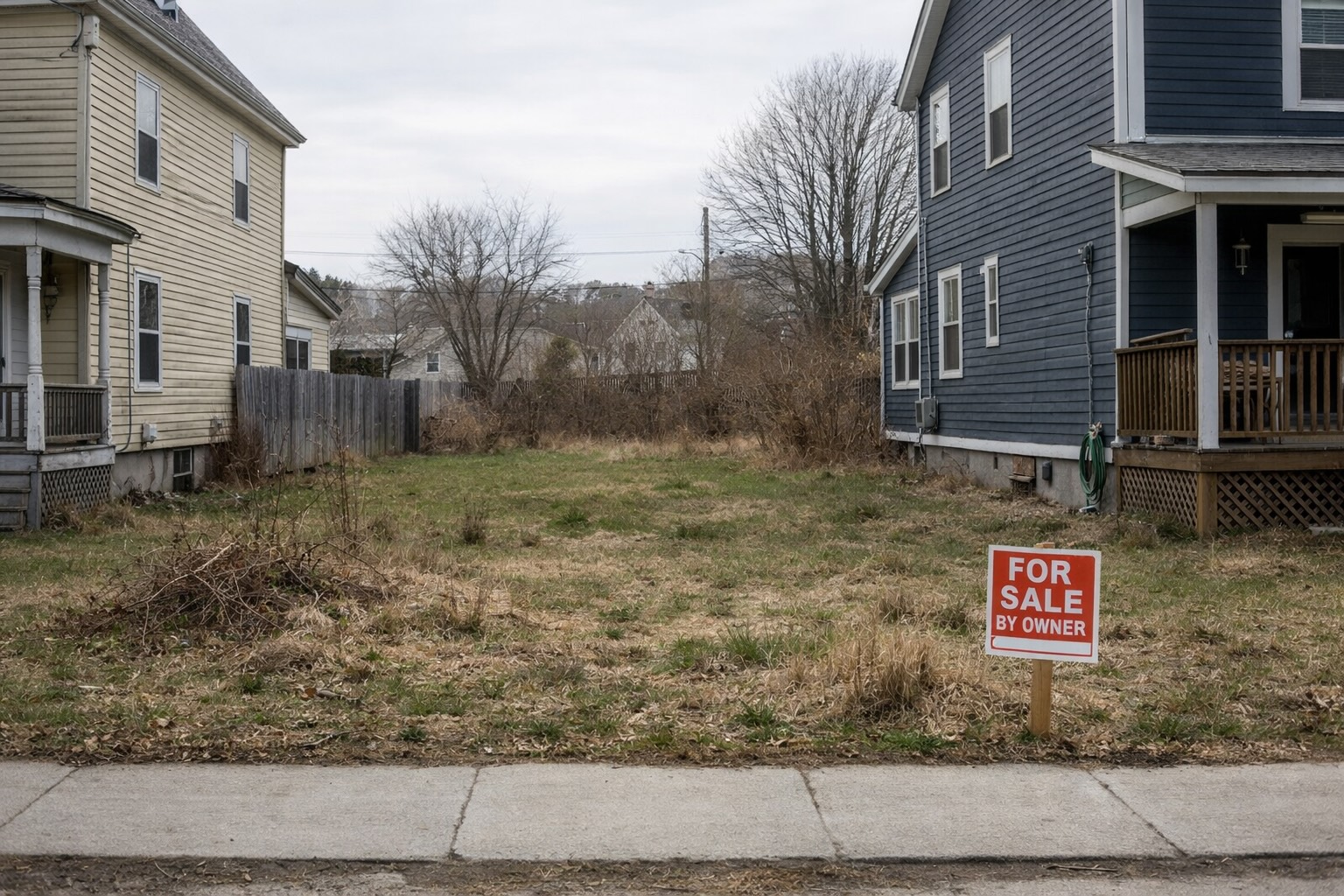
A vacant infill lot in a Vermont neighborhood, hemmed between two occupied homes — the kind of gap-site the 802 Homes catalog is designed to fill
The gap that should have a house in it. Vermont's infill lots sit empty not because people don't want to build, but because the design-review-plus-permit gauntlet made the math not work. The 802 Homes catalog attacks that exact problem — on qualifying lots, in qualifying towns.

What Works: Three Moves to Make Before the Catalog Even Goes Live

Direct Answer

The 802 Homes catalog is most powerful for property owners who already hold a qualifying infill lot in Essex Junction, Hartford, or Manchester and want to add a unit without hiring an architect from scratch. If that's your situation, the timeline compression is real — weeks instead of months through design review. If it's not, the catalog still rewards preparation: statewide expansion is coming, and getting ahead of it costs nothing.

  • 01
    Map your parcel's eligibility today. Call the planning department in Essex Junction, Hartford, or Manchester directly and ask whether your specific lot qualifies as a 802 Homes development-ready site. This is a five-minute phone call that prevents a five-figure mistake. Time: 1 call  ·  Cost: free  ·  Risk: discovering your lot doesn't qualify — which is better to know now than after $10,000 in builder conversations
  • 02
    Commission a preliminary site assessment before you fall in love with a plan. A civil engineer's preliminary site visit evaluates soil type, drainage patterns, frost exposure, perc viability, and utility hookup complexity. This is the work the catalog doesn't do for you — and it determines whether your lot is a $450,000 project or a $650,000 one. Time: 2–4 weeks to schedule  ·  Cost: $500–$1,500 (illustrative range, Vermont market)  ·  Risk: discovering the site has a drainage or soil problem — again, better now
  • 03
    Start the modular conversation 12–18 months before you want to break ground. If modular delivery is on your radar — and the cost and speed arguments are real — contact Huntington Homes in East Montpelier or another regional off-site builder now. Capacity is constrained. Lead times are not a formality. Summit Properties saved roughly 10% on construction costs using modular for 45 units in Middlebury. That math compounds. Time: start today  ·  Cost: exploratory call is free  ·  Risk: waiting until you have approved plans and finding the calendar is full
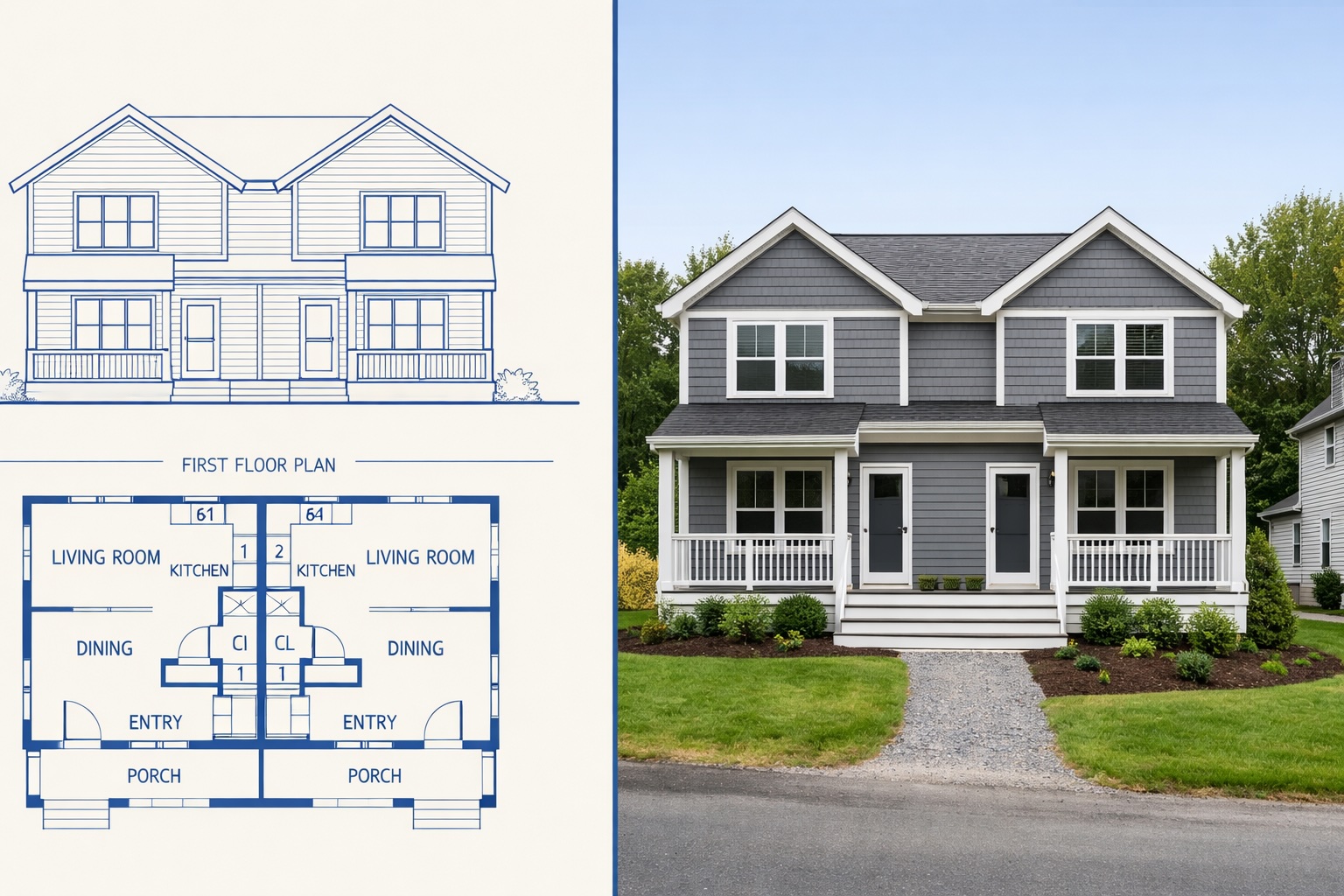
Architectural blueprint drawing juxtaposed with a completed Vermont duplex — illustrating the 802 Homes concept of moving from catalog plan to built result
From plan to place. The 802 Homes concept is deceptively simple: a free, pre-approved architectural drawing that skips design review. What it doesn't skip is the site engineering, the builder search, and the financing. Know where the shortcut ends.

Vermont Context: Why These Three Towns, and What It Means for Central Vermont

Direct Answer

Essex Junction, Hartford, and Manchester weren't chosen randomly. They represent Vermont's three major housing pressure zones — Chittenden County suburban growth, Upper Valley workforce demand, and southern Vermont's second-home and seasonal market — and they've each already rewritten local zoning to permit denser development. Their permitting data will determine whether this program scales statewide.

Essex Junction has been Vermont's most aggressive housing reformer. Its new zoning permits denser infill, encourages mixed-use, and now pairs with 802 Homes to test whether catalog designs can actually compress approval timelines from months to weeks. The February 7, 2026 public workshop — packed with planners, builders, and property owners reviewing poster boards of duplex designs — wasn't theater. It was a production test.

In Manchester, developer Bill Drunsic owns a parcel and is working with the state to build a cluster of catalog homes as a proof-of-concept. His framing is direct: "This hopefully will tear down that wall and make the field a lot more attractive and interesting for people to participate." He's right — if the wall comes down, the field changes.

The catalog home concept is not new. A century ago, Sears sold mail-order blueprints that built thousands of modest, durable homes across America and Vermont. Vermont is going back to that well — not out of nostalgia, but out of necessity. The housing math leaves no room for elegance as an excuse for delay.

For buyers and builders in Central Vermont — Washington, Lamoille, and Chittenden Counties — the statewide expansion under H.602 is the number to watch. When it passes, the question shifts from does my town qualify? to is my lot ready? That preparation window is open right now.

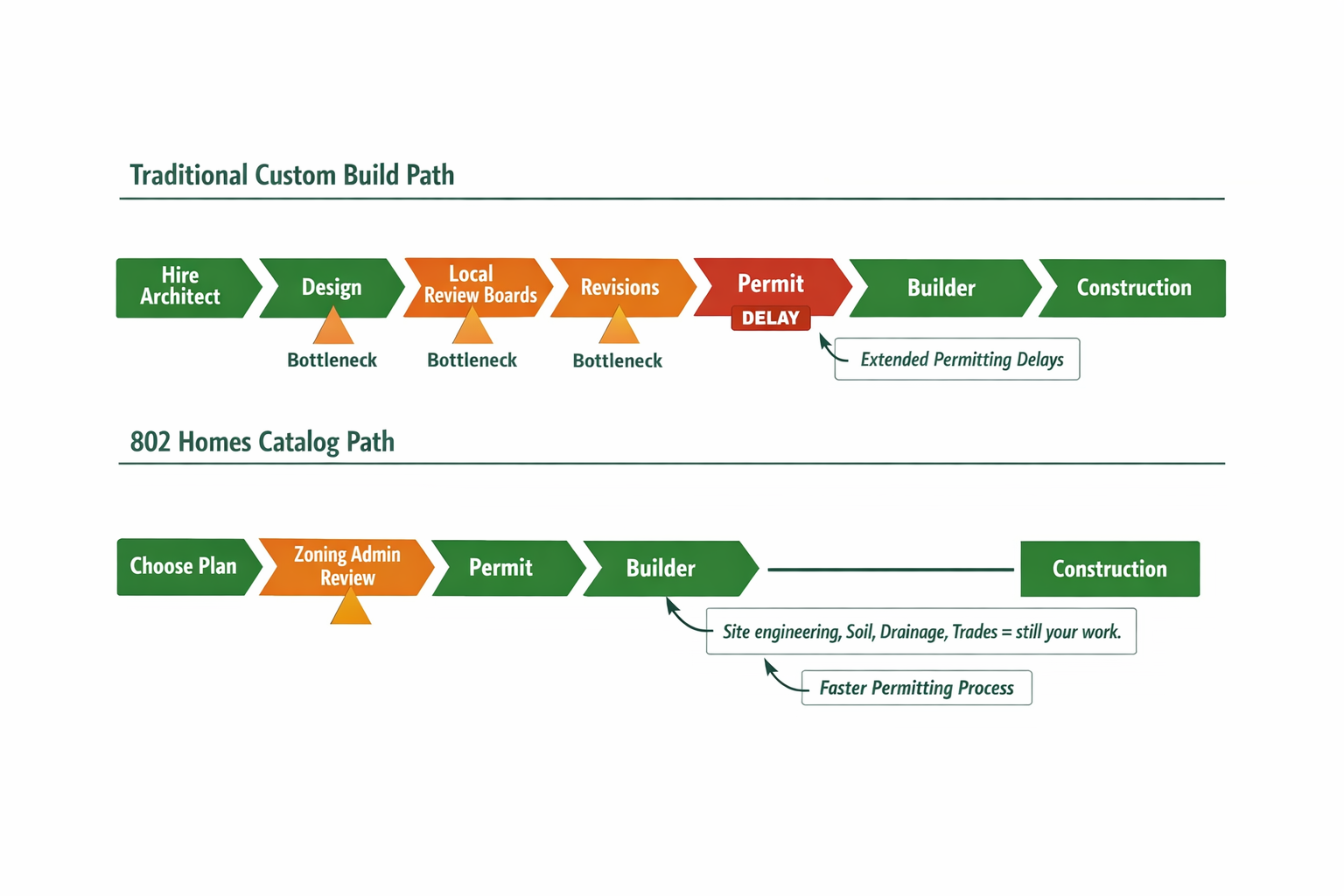
Timeline comparison diagram: Traditional custom build path versus 802 Homes catalog path, showing where permitting is accelerated and where site engineering work remains
The shortcut is real — but it's in one lane. The 802 Homes catalog compresses design review and local approval. Site engineering, builder procurement, and construction financing are unchanged. Map your project against both timelines before you assume the fast track applies to you.

Bottom Line: Vermont Is Finally Serious About Building Faster. Are You Ready?

Direct Answer

The 802 Homes catalog is the most significant housing production tool Vermont has launched in a generation. For the right person — qualifying lot, pilot town, cooperative site — it compresses a 12–18 month permitting and design process into weeks. For everyone else, it's a signal: statewide expansion is coming via H.602, and the preparation window is open now. The question isn't whether to pay attention. It's whether you're positioned to act when it arrives in your town.

Free plans are not a free house. They are not a free permit. They are not a free builder. What they are — in the right hands, on the right lot, in the right town — is a genuine compression of the most expensive and unpredictable part of the build process: the front end. That is worth something. In Vermont's construction market, where every week of permitting delay is a week of rising material costs and thinning trades, it may be worth quite a lot.

Bottom line: Understand what this program does and doesn't do before your neighbors do. Call your zoning administrator, get your site assessed, and have the builder conversation before everyone else in your municipality is trying to have it at the same time.

If you're evaluating land in Washington, Lamoille, or Chittenden County — or trying to figure out whether a parcel you already own is positioned for what's coming — New England Landmark Realty's Vermont Home Buying Guide is a strong starting point. And then call Tony.

New England Landmark Realty  ·  Blueprint: Vermont Design & Build

Ready to Read the Land Before You Build on It?

Tony Walton has been helping buyers and builders navigate Central Vermont's land and housing market since 2003. Whether you're evaluating a parcel, planning a build, or trying to understand what Vermont's new housing programs mean for your specific situation — this is a conversation worth having before you spend a dollar on plans.

Where to Go Next

Posted in Design Build
March 16, 2026

83 Days on the Market. That Number Should Get Your Attention.

The Numbers Guy — Vermont Real Estate Data

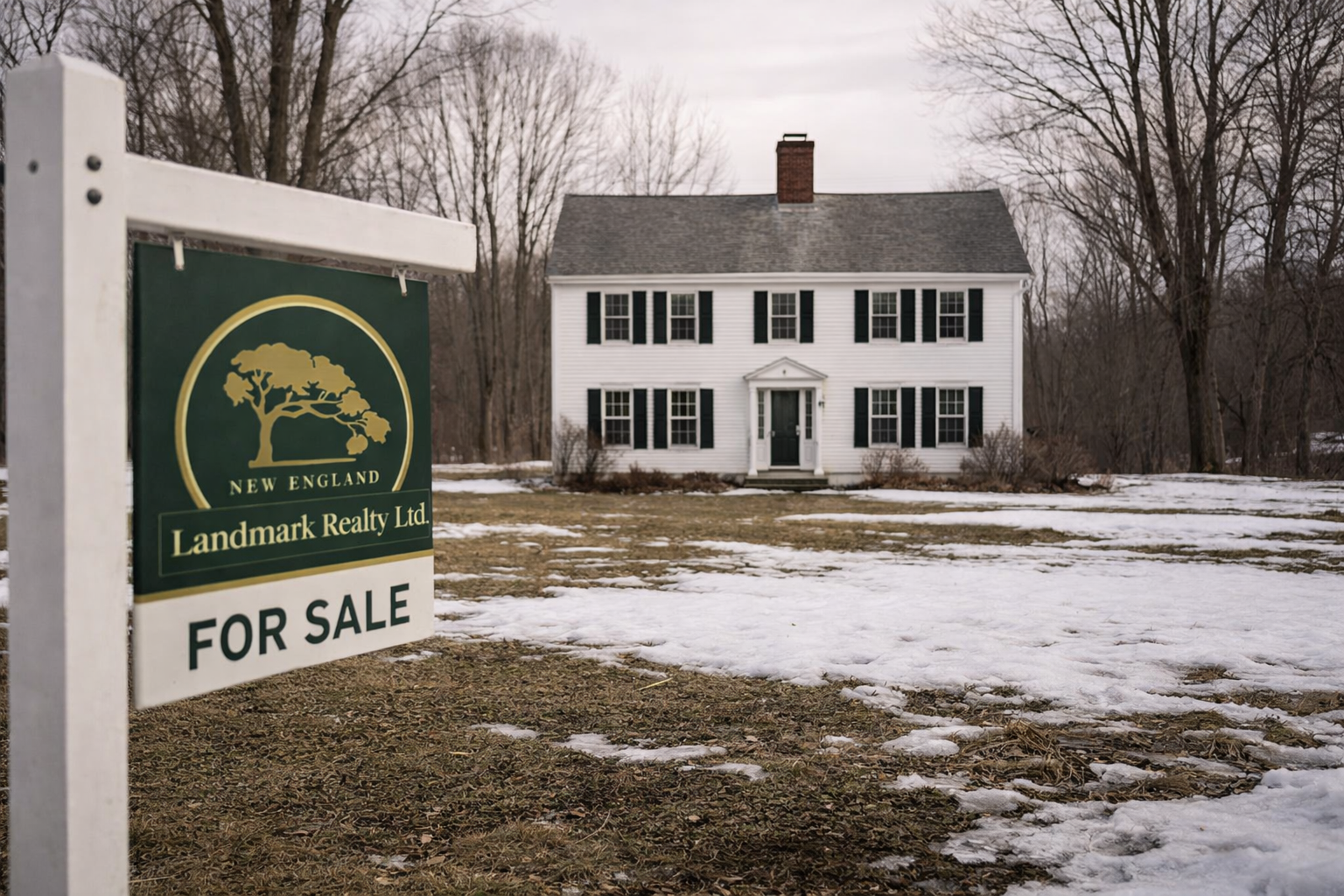
Vermont farmhouse for sale in late winter, for sale sign visible, bare trees and snow on ground
A Vermont listing in 2026 faces a different market than it would have three years ago. The data is telling a specific story. — New England Landmark Realty

Vermont homes are averaging 83 days on the market — and by the industry's own definition, anything over 70 days is a buyer's market. Sellers who price like it's 2022 are getting a lesson from the data, one slow week at a time.

If you only do 3 things:

  • Sellers: Price accurately on day one. Overpriced listings in this market don't get a second look — they get a stigma.
  • Buyers: You have more negotiating room than you've had in years. Use it thoughtfully — quality homes are still moving.
  • Either way: Read local data, not national headlines. Vermont has its own math right now.

What Changed — and the One Number That Matters

Vermont homes are now sitting an average of 83 days on the market — well past the 70-day threshold that defines a buyer's market. That's a meaningful shift from the sub-45-day frenzy of the pandemic years, and it means sellers no longer control the room the way they once did. If you're listing in Central Vermont this spring, that number should be the first thing you discuss with your agent.

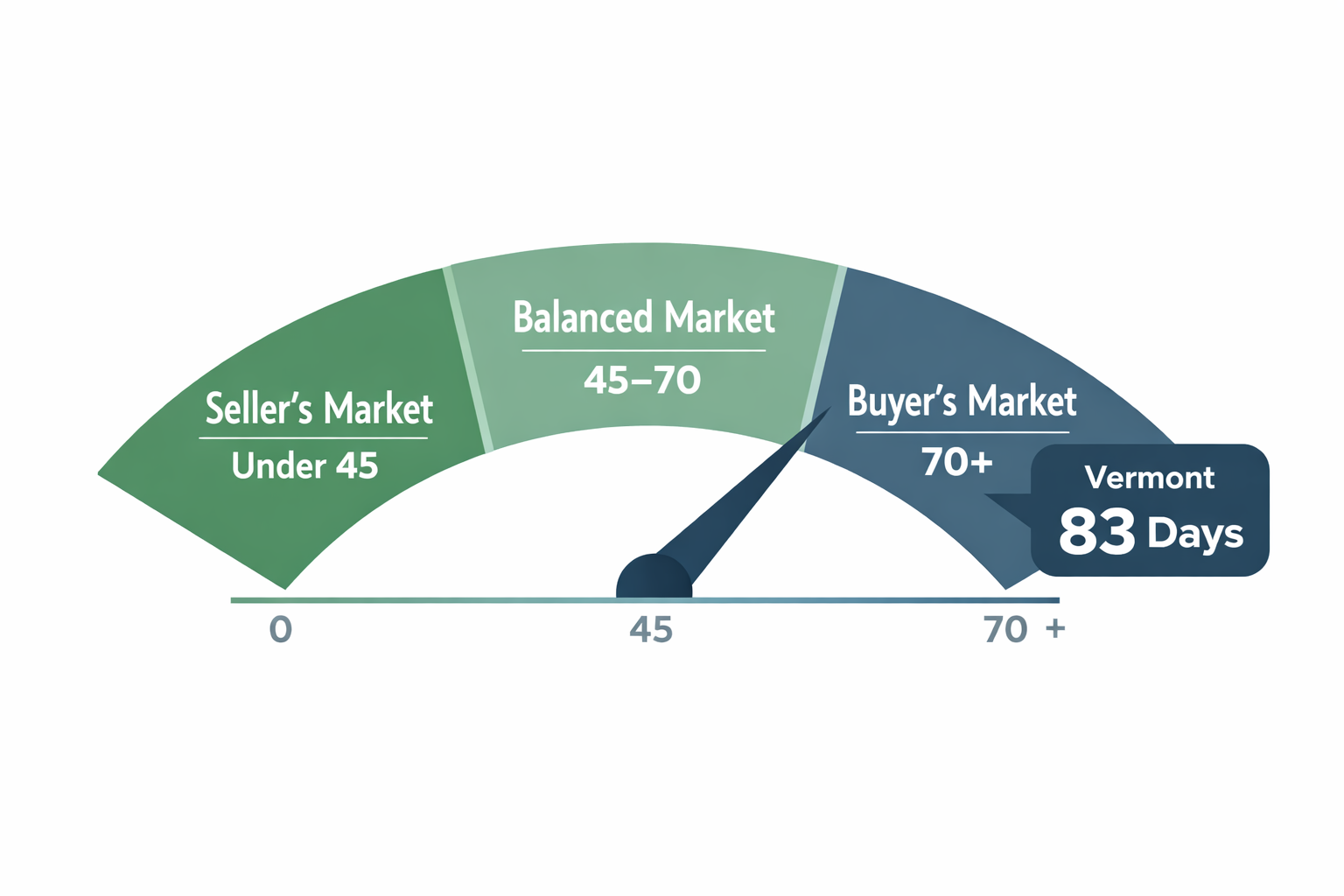
Here's the standard read on days on market (DOM): under 45 days signals a seller's market, 45–70 days is balanced, and over 70 days favors buyers. Vermont is sitting at 83. That's not a rounding error. That's a clear signal that the market has shifted.

What it doesn't mean: collapse. Vermont's median sale price is still around $428,300, essentially flat year over year. Homes aren't losing value. They're just not flying off the shelf anymore — and that distinction matters a great deal depending on which side of the transaction you're on.

Days on market benchmark chart showing seller's market under 45 days, balanced market 45 to 70 days, buyer's market over 70 days, Vermont currently at 83 days
Days on Market benchmarks. Vermont's current 83-day average sits clearly in buyer's market territory. — Illustrative, based on industry-standard DOM thresholds.

83 Average days on market, Vermont — 2026 (Houzeo / MLS data)

The Data — What the Numbers Are Actually Saying

Three data points tell the story: 83 days on market, roughly 3 months of statewide supply, and a documented trend of Chittenden County sellers receiving less than asking price through 2025. Together they describe a market that still has underlying value but demands pricing discipline. Sellers who ignored this in 2025 paid for it in time and in price reductions. Spring 2026 is setting up the same way.

Let's run the numbers. Statewide inventory sits around 3 months of supply. A balanced market runs 4–6 months. So Vermont is not a buyer's market by the supply metric alone — but 83 DOM tells you buyers are taking their time. They're comparing. They're negotiating. That's a behavioral shift, even if supply hasn't fully caught up to confirm it.

Translation: the market is technically still undersupplied, but buyers have stopped acting like it. That's what DOM captures that inventory numbers miss.

Couple reviewing real estate documents at a kitchen table, deliberate and thoughtful expression, natural light
The decision calculus has changed. Vermont buyers in 2026 are taking more time — and the data backs them up. — New England Landmark Realty

So What Does That Mean for Vermont?

In Central Vermont — Washington, Lamoille, and Chittenden counties — the 83-day average masks meaningful variation by town and price point. Homes priced correctly and presented well are still competitive. Homes that aren't are sitting, accumulating days, and eventually negotiating from a weakened position. The market isn't punishing sellers. It's just stopped rewarding bad pricing.

Here's what the data tells us about spring 2026 in Vermont: more inventory is coming to market. New listings are trending up statewide, and the "lock-in effect" — owners frozen by their 3% pandemic-era mortgages — is fading as life changes force decisions. More supply plus a buyer base that is already taking its time equals a longer runway for each listing.

The towns that are still moving quickly? Properties in the $300K–$500K range that show well, are priced to the current market, and hit MLS clean. Everything else is contributing to that 83-day average. Math doesn't care about what the neighbor's house sold for in 2022.

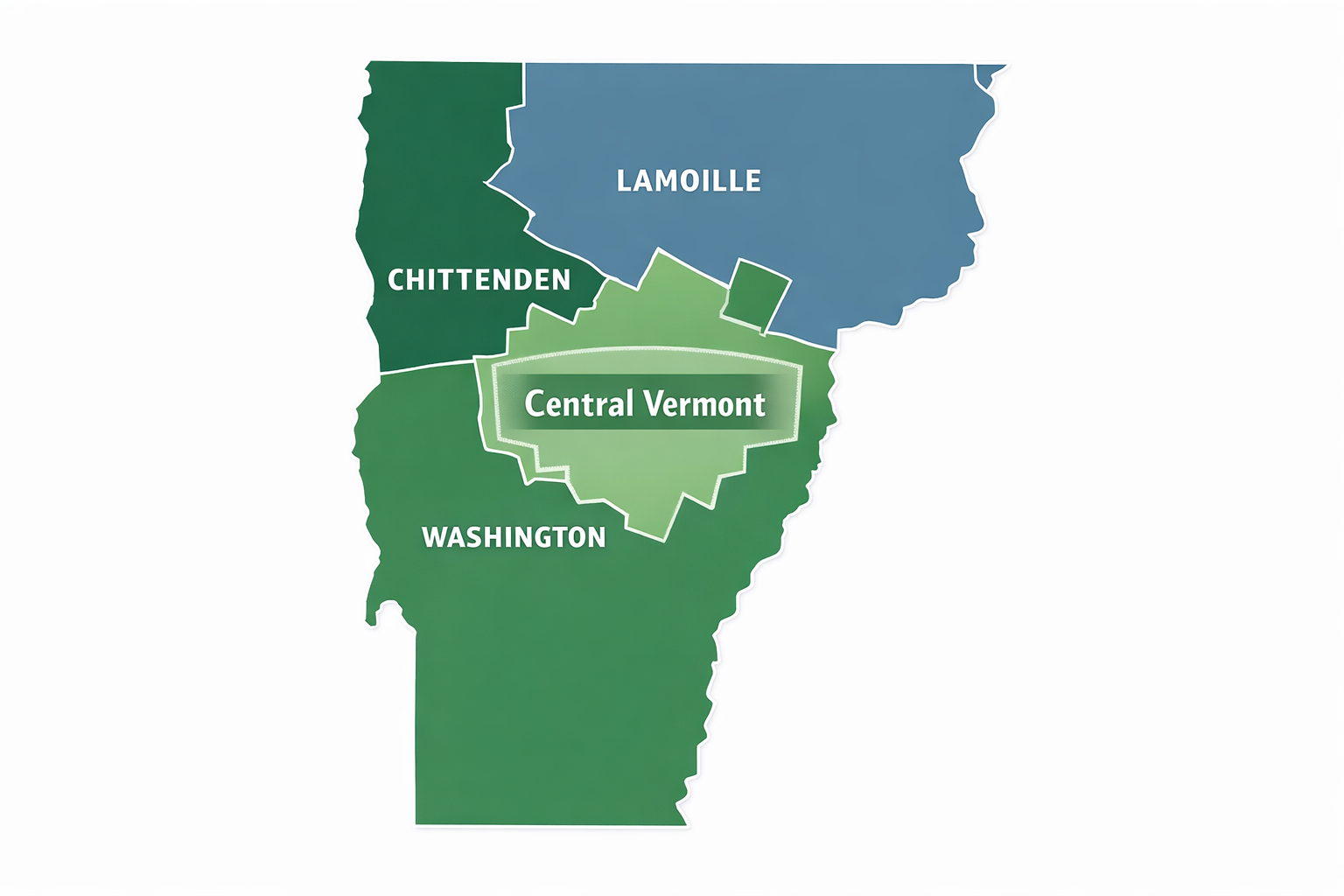
Vermont county map highlighting Washington, Lamoille, and Chittenden counties — Central Vermont real estate focus area for New England Landmark Realty
New England Landmark Realty (NELR) operates across Central Vermont, with primary coverage in Washington, Lamoille, and Chittenden counties. Local data matters more than statewide averages.

Bottom Line — Here's the Play

The Vermont housing market in 2026 rewards preparation and punishes assumptions. Sellers who price accurately from day one avoid the compounding damage of price reductions and extended DOM. Buyers who understand they have negotiating room — without expecting deep discounts — are the ones closing. The opportunity on both sides is real, but it requires reading the current data, not the last cycle's memory.

If you're selling: The listing price you set on day one is your most powerful tool — and your biggest risk. An overpriced home in an 83-day market doesn't just sit. It signals to every buyer's agent in the MLS that something is off. By the time you cut the price, the best buyers have already moved on. Price it right. Once.

If you're buying: You have more room to breathe than you've had since before the pandemic. Inventory is up, sellers are more realistic, and 83 days on market means you're not the only offer on the table — or you don't have to be. The expensive mistake here is waiting for a crash that isn't coming. The smarter move is finding a well-priced property and negotiating from the real data.

Ready to Make the Numbers Work for You?

Tony Walton and the team at New England Landmark Realty have been reading Vermont's market data — town by town, price point by price point — for years. If this article changed how you're thinking about your next move, the next step is a conversation with people who know what the numbers look like on your specific street.

Whether you're pricing a home to sell, trying to figure out your buying window, or just want a straight read on what your property is worth in this market — Tony's team is the call to make.

📞 Office: (802) 253-4711  |  (866) 324-2427

📱 Tony Walton, Principal Broker: (802) 233-4107

🌐 www.nelandmark.com

Sources:
Days on market and inventory data: Houzeo Vermont Market Data, 2026  |  Vermont 2025 market performance: Hickok & Boardman Vermont Market Report, Early 2026  |  DOM benchmark definitions: industry-standard real estate market classification (NAR / MLS convention). Median price figures are approximate and reflect MLS-reported statewide data. Central Vermont figures vary by town and price point. The Numbers Guy is a market analysis column produced by New England Landmark Realty (NELR). Tony Walton, Principal Broker.
Posted in Home Selling Tips
March 13, 2026

Vermont Has Two Real Estate Markets. When One Collapses, So Does the Other.

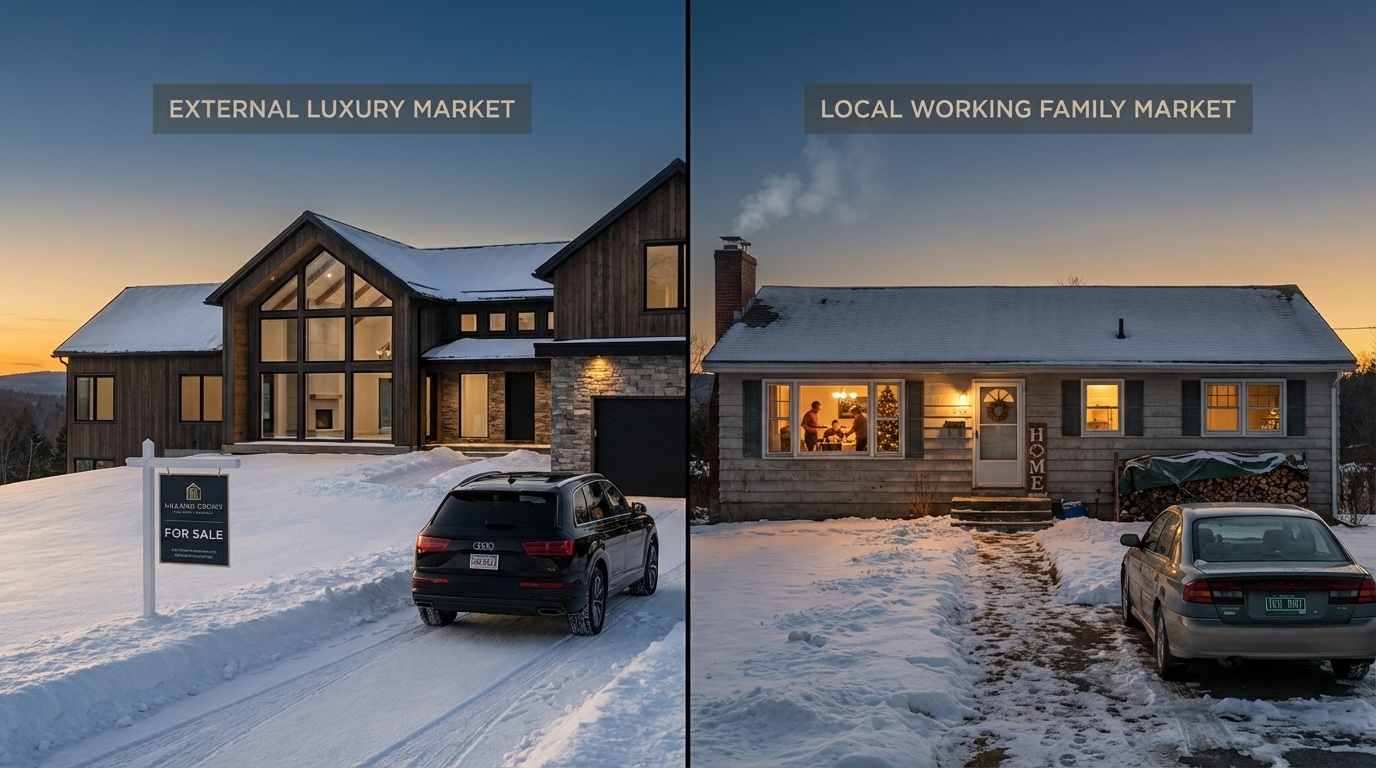
Vermont Dual Market Graphic

Vermont’s Dual Real Estate Market: The Structural Shift We Can’t Ignore

Strategic Executive Summary

Vermont is currently operating under a dual-market system. One is fueled by local wages; the other by external equity. These two systems have become dangerously decoupled, creating a structural fragility that affects every buyer and seller in the state.

  • For Sellers: Your equity is real today, but it depends on a shrinking pool of external buyers. Prioritize an "exit with certainty" over chasing a peak price that may have already passed.
  • For Local Buyers: Do not mistake a "correction" for "affordability." Even if prices drop 10%, tighter lending and higher taxes often cancel out the savings. If the payment works for your 10-year plan, utility is more important than timing.
  • For Investors: You are the liquidity in this market. Ensure your assets can survive a shift from "short-term vacation rental" back to "local residential fundamentals" if external demand continues to slow.

I’ve been in the trenches of Vermont real estate since 2003, and it is time to have a candid conversation about the mechanics of our market. Vermont's real estate environment isn't a single market. It's two separate systems stacked together, and we are currently seeing the gap between them widen.

Market #1: The External Liquidity Market

Today, Vermont's pricing floor is set by external liquidity. This market is dominated by out-of-state buyers importing equity from more expensive metros like Boston and New York.

The data is clear: Vermont has the second-highest rate of second-home ownership in the nation. When 41% of our housing stock is either rental, vacation-based, or vacant, we are no longer a local market; we are an equity-export destination. These buyers compete with cash or massive down payments, setting a price floor that local wages simply cannot reach.

Market #2: The Local Wage Market (Displaced)

While external buyers set the prices, the people who keep Vermont running—the teachers, tradespeople, and healthcare workers—must react to them. The numbers reveal a staggering gap: 91% of Vermont households are now effectively priced out of the median market ($385,000).

This dependency on external money is a fragility, not a strength. When that external "faucet" of equity slows down due to economic shifts in other states, Vermont's market loses its primary engine of liquidity. This is where the risk of a "freeze" begins.

The 2026 Warning: The Velocity Trap

We are entering a period of Stagnant Velocity. In this environment, prices may look high on paper, but the ability to sell (liquidity) disappears. A house "valued" at $600k that takes 10 months to sell is a liability for a seller who needs to move for a job or a family change.

Historical Context: Why This Time Is Different

During the Great Recession (2008–2010), Vermont home prices only fell about 5% on paper. However, when you adjust for inflation, it actually took seven years for Vermont home prices to recover in real terms.

In 2008, our market was more balanced. In 2026, we are far more dependent on out-of-state buyers. If that pool of buyers shrinks—which is already happening as Vermont saw the largest percentage population decline in the region in 2025—there is no local buyer base large enough to catch the fall. This is why resort towns like Stowe and Woodstock are often the "canaries in the coal mine."

The Bottom Line

We are transitioning from a market of speculation to a market of transactional reality. The period of "easy equity" is ending, and we are entering a period of price discovery. For anyone involved in Vermont real estate, the question is no longer "How much can I get?" but "How liquid is my position?"

Success in 2026 requires moving away from the "Zoom Boom" mindset and looking at the hard data. Whether you are holding, buying, or selling, your strategy should be based on long-term sustainability rather than short-term appreciation.

Ready to Navigate the Shift?

Whether you are evaluating your home's equity or trying to find a path to homeownership in Central Vermont, let’s talk through the data-driven reality of your options.

Tony Walton
Principal Broker, New England Landmark Realty
Waterbury, Vermont

Direct: (802) 233-4107
Email: tony@nelandmark.com
Web: www.nelandmark.com

Sources & Data References

  1. VT Legislative Joint Fiscal Office (JFO), "Housing Stock" fact sheet, 2025.
  2. Vermont Housing Needs Assessment 2025-2029, JFO Executive Summary.
  3. U.S. Census Bureau data via Vermont Futures Project, January 2026.
  4. Vermont Public Radio, "Vermont population declines again," Jan 2026.
  5. VHFA historical data on real vs. nominal price recovery (2008-2015).

About the Author: Tony Walton is the Principal Broker and founding partner of New England Landmark Realty in Waterbury. He has guided clients through multiple market cycles in Central Vermont since 2003, focusing on market mechanics and regional economic trends.

March 11, 2026

The First Sunny Day

 A column by Harris Vexley

The first sunny day in Vermont is treated like a national holiday that no one can quite believe is actually happening.

It begins subtly. A brightness at the edge of the curtains. A suspicious warmth on the kitchen floor. You approach the window the way one approaches a package on the porch that you definitely didn't order—slowly, braced for confusion.

And there it is.

The Sun.

Unfiltered. Unapologetic. Vaguely accusatory about how long you went without seeing it.

When it appears, Vermonters gaze at it with the solemn awe of medieval peasants witnessing a miracle. There will be murmurs. Possibly tears. Someone will grill something prematurely.

Within minutes, the town transforms. Neighbors emerge blinking like refugees from a soft-lit underground, dressed in what can only be described as Thermal Denial. Someone is in shorts. It is 41 degrees. That person has made a theological commitment to spring and will see it through.

You will hear grills ignite across the valley like ceremonial beacons. The smell of charcoal mingles with thawing mud and wildly misplaced confidence. A man named Carl will announce, "Feels like July," while standing beside a snowbank the size of a Volkswagen. His wife Carol says nothing, because Carol has seen this enthusiasm before and knows where it leads.

Dogs experience complete psychological collapse. They sprint in mystified circles. One Golden Retriever eats an entire stick out of pure emotional overwhelm. The mail carrier walks with the bearing of someone delivering news of a great victory.

By noon, optimism reaches genuinely concerning levels. Someone at the general store is asking about tomato seedlings. Tomato seedlings. In March. The clerk nods as though this is a reasonable question and not evidence of a cognitive break.

A man exits the hardware store with twelve bags of topsoil stacked on a dolly. He has a look of profound purpose. He will not use any of it this month. Possibly not this season. But he has made a purchase, and that is a form of covenant with the future.

A teenage girl emerges in bermuda shorts and flip-flops with declarative rubber flowers. It is 43 degrees. Her mother watches from the porch. Frostbite is an excellent teacher.

At the farm stand on Route 100, farm stand Dan Bouchard leans against his truck, watching cars pull in. He's been up since 4 a.m. Milking doesn't care about the sun.

"When will strawberries be ready?" someone asks.

"June."

"But it's so warm—"

Dan looks at her. Then at the mountains, still half-white. Then back.

"June," he says.

His wife Evelyn appears from the barn with a shovel, sees the line of cars, and stops. She looks at Dan. Dan looks back. An entire conversation happens in silence.

Someone asks about corn.

Evelyn shakes her head the way you'd shake your head at a dog that keeps trying to eat the same houseplant.

"Every year," she says to no one in particular, and goes back inside.

By 4 p.m., the hardware store has sold out of garden gloves, bird seed, and a truly alarming quantity of geraniums. People are discussing outdoor furniture. Carl is still grilling. The man in shorts has committed to the bit so thoroughly he's now wearing sandals. His feet are red. He's smiling.

The sun begins its slow descent behind the ridgeline, and the temperature does drop—enough to send people back indoors, back to woodstoves and wool socks and the layered realities of March in Vermont.

But something has shifted.

You saw it. The light. The possibility. The way even the snow looked slightly embarrassed to still be there. You stood outside for ten consecutive minutes without a coat and lived.

The tomato seedlings will wait in someone's kitchen window for eight more weeks. The topsoil will become permanent shed infrastructure. The flip-flops will be disappeared. Carl's grill will get snowed on at least twice more.

And it will not matter.

Because that one day—that single, ridiculous, 47-degree day in March where everyone collectively lost their minds and bought geraniums—that day is what gets you through mud season.

That day is what lets you believe, against all meteorological evidence and farm stand Dan's better judgment, that winter does, eventually, end.

That day is vitamin D and collective delusion and proof that Vermonters are not, as a people, particularly rational—but they are, when it counts, profoundly hopeful.

The sun will come back. Probably when you're not looking.

And when it does, you'll do this all over again.


Harris Vexley spent thirty years as a licensed real estate broker in Vermont. He is now retired, which mainly means he drives around more and talks to fewer people about it.

Thinking About a Move This Spring?

Call our office at (802) 253-4711 or toll-free at (866) 324-2427. You can also reach Tony directly at (802) 233-4107.

Start here:

March 9, 2026

When the World Catches Fire, Vermont Doesn’t Burn the Same Way

New England Landmark Realty — Friday Newsletter — March 6, 2026

By Tony Walton  |  Jump to Key Takeaways

Six days ago, the United States and Israel launched major combat operations against Iran. As of this morning, the Strait of Hormuz — the 21-mile chokepoint through which roughly 20% of the world’s oil transits — is now a geopolitical grenade with the pin sitting at an uncomfortable angle.

This is not a drill.

So what does a war in the Persian Gulf mean for the price of a farmhouse in Washington County? More than you’d think. And differently than the headlines suggest.

Key Takeaways

For Buyers, Sellers, and Anyone On the Fence

This analysis gives Vermont buyers, sellers, and spring-market decision-makers clear-eyed context — not media noise — to act with confidence right now. It maps three distinct scenarios so you can locate your position and move accordingly.

If You Only Remember 3 Things

  • The Iran conflict has already reversed mortgage rates upward — timing your next move now matters more than waiting for clarity that may not come.
  • Vermont’s buyer base — remote workers, second-home seekers, equity-rich relocators — tends to accelerate toward Vermont during national instability, not away from it.
  • Inventory is up year-over-year, but supply remains tight: Vermont is still a seller-aligned market, and that structural reality does not change with headline risk.

Quick Facts

  • Mortgage rates moved from a 3.5-year low of 5.98% to above 6.12% within 48 hours of the Iran strikes.
  • Vermont single-family median price: approximately $435,000, up roughly 5% year-over-year.
  • Active listings are up 33.6% year-over-year, but months of supply sits at 2.9 — well below a balanced market threshold.

The Macro: Ugly, But Complicated

Let’s start with the numbers that matter.

Mortgage rates were flirting with 5.98% last week — a three-and-a-half year low. That window slammed shut the moment the first strike landed. Rates jumped 13 basis points overnight, back above 6.12%. Barclays is telling clients Brent crude could test $100 a barrel. The S&P 500 has already vaporized $3.2 trillion in market value. Inflation expectations — which the Fed had spent two years carefully taming — are reigniting.

The mechanism is straightforward: oil up → transportation and production costs up → inflation fears revive → bond yields spike → mortgage rates follow. What was shaping up to be the best spring buying season in three years just got a wrench thrown through its windshield.

There’s a darker scenario. If Iran manages to disrupt Strait of Hormuz shipping — even temporarily — analysts are calling it a “guaranteed global recession.” That’s not hyperbole from a Twitter economist. That’s from people who run sovereign risk models for a living.

Here’s the tension: war is simultaneously inflationary and recessionary. It raises prices AND destroys demand. That combination — stagflation — is the one scenario where nobody wins, including the Fed, which would face a lose-lose choice between cutting rates to save the economy or holding them to fight inflation.

Now. Here’s Where Vermont Gets Interesting.

Vermont is not Dubai. We are not a financial hub. We don’t have an embassy that can be rocketed. What we have is something increasingly rare in an anxious world: land, community, and quiet.

Let me walk you through three plausible scenarios for our market this spring and summer.

Scenario One: The Freeze 🧊

Probability: Moderate

Uncertainty is a buyer’s enemy. When people don’t know whether their portfolio will be down 20% by June, they don’t sign purchase and sale agreements. The rate spike alone could sideline thousands of qualified buyers nationally. Locally, our entry-level inventory — already a source of chronic pain for first-time Vermont buyers — gets even further out of reach. Oil at $100/barrel doesn’t just hurt at the pump; it hammers heating fuel costs for a state that still runs heavily on propane and heating oil. Construction costs climb. New inventory stalls. The spring market goes quieter than anticipated.

This is the scenario where sellers hold, buyers hesitate, and the phone rings less. It’s real. We shouldn’t pretend it isn’t.

Scenario Two: The Safe Haven Surge 🏡

Probability: Also Real — and Underappreciated

Here’s what the national real estate commentary is missing: instability has historically been a tailwind for Vermont, not a headwind.

Post-9/11. Post-2008. The early COVID years. Each wave of national anxiety produced a corresponding wave of urban flight toward places that felt — and were — safer, saner, and more human-scaled. That pattern is already embedded in our 2026 market. Remote workers, second-home buyers, equity-rich retirees leaving Boston, New York, and D.C. — these are our buyers. And they don’t stop wanting to move to Vermont because the Middle East is on fire. They accelerate.

Geopolitical uncertainty globally is already accelerating what analysts are calling a “safe-haven property shift” — buyers prioritizing political stability, land, and quality of life over proximity to financial centers.

Vermont — with its median single-family price of ~$435,000, its intact community infrastructure, its schools, its forests, and its relative insulation from geopolitical violence — starts to look less like a lifestyle choice and more like a strategic asset allocation decision. Hard assets. Real land. Resilient community. That’s not a vacation home pitch. That’s a wealth preservation argument, and it resonates with exactly the buyer demographic that drives our market.

Our inventory is up 33.6% year-over-year — more options, less hysteria. But “more options” in Vermont still means 2.9 months of supply. That is not a buyer’s market. That is a disciplined seller’s market with better manners.

Scenario Three: The Whipsaw 🎢

Probability: Higher Than Anyone Admits

War-driven rate increases have a history of reversing fast when the economic damage becomes undeniable. The Fed — already walking a tightrope — could be forced to cut aggressively if recession signals start flashing red. The 10-year Treasury was at a multi-month low of 3.92% the day before the strikes. That tells you where the underlying economic trajectory was pointed before the bombs fell.

If this conflict de-escalates in weeks rather than months — a very real possibility, given Trump’s stated preference for a “quick” war and the Senate’s pushback — we could see rates fall back below 6% by late spring. That would trigger a release of pent-up demand that makes the spring market ferocious. Buyers who are sitting on the sidelines right now, waiting for clarity, would come rushing back simultaneously. Low inventory + sudden demand surge = exactly the kind of competitive market that produces multiple offers and above-list sales prices.

The whipsaw is the scenario where the people who waited for certainty missed the window. Again.

The Vermont-Specific Bottom Line

If you’re a seller: Your equity is real, your market position is strong, and the demographic wave driving Vermont demand doesn’t reverse because of geopolitical turbulence — it deepens it. Price right. Show well. Move now, before the macro gets worse or the window narrows.

If you’re a buyer: Yes, rates are back above 6%. Yes, the headlines are ugly. But you are not buying a stock. You are buying land in one of the most stable, community-rich, naturally beautiful states in America. Vermont real estate has not crashed. It has not cratered during any major crisis in living memory. The people who “waited for things to calm down” after COVID paid 40% more when they finally bought. Date the rate. Marry the house.

If you’re on the fence: That fence just got more expensive. Every week of uncertainty that drives oil higher, inflation higher, and rates higher is a week that costs you real money in carrying costs and purchasing power. Clarity is not coming fast. The Senate is fighting over war powers. Boots may or may not be on the ground. The Strait of Hormuz may or may not close. Nobody knows. What you do know is that the house on the hill in Waterbury isn’t getting cheaper, and the people who want to live next to you aren’t going away.

One More Thing

Vermont, historically, has been a place people run toward when the world gets loud. We are not immune to macroeconomic forces. Heating oil prices matter here more than almost anywhere in the continental US. A full-blown recession would slow our market. We don’t pretend otherwise.

But there’s something durable about this place — its character, its community, its relationship to the land — that shows up in the data every single time the world decides to lose its mind. Vermont holds. Sometimes it even quietly appreciates while everyone else panics.

That’s not spin. That’s thirty years of watching this market breathe.

Sources

  1. Reuters — “Iran war poses new risk to US economic resilience”
  2. Realtor.com — “Iran Conflict Sends Oil Prices Up in Troubling Sign for Mortgage Rates”
  3. Yahoo Finance — “The war in Iran could lead to a ‘guaranteed global recession’”
  4. CNBC — “Mortgage rates jump sharply higher after Iran strikes”
  5. Polarius International Real Estate / Vents Magazine — “Global Geopolitical Uncertainty Accelerates Shift Toward Safe-Haven Property Markets”
  6. Lake Champlain Real Estate — “January 2026 Northwest Vermont Real Estate Market Update”

  7. New England Landmark Realty — “Vermont Home Prices + Inventory Both Rise”
  8. HousingWire — “Will war with Iran send mortgage rates higher or lower?”
  9. NPR — “Oil prices surge, but no panic yet, as Iran war continues”
  10. Al Jazeera — “Iran live news: Iran death toll at 1,045”

Ready to Talk Vermont Real Estate?

Whether you’re weighing a sale, watching from the sidelines, or ready to make your move — Tony Walton and the New England Landmark Realty team are here for a straight-shooting conversation about your position in this market.

www.nelandmark.com

Where to Go Next

March 6, 2026

The 8-Foot Killer: How Vermont Entries Are Ending Showings Before They Start


New England Landmark Realty (NELR)  ·  Kore's Design Eye


By Kore's Design Eye  ·  New England Landmark Realty (NELR)  ·  February 19, 2026

Vermont buyers make their go/no-go call in the first 90 seconds. The entry is where that clock starts. Most listings in Central Vermont are losing that race before the buyer even takes off their coat.

The Short Version

Vermont entries — cluttered, dim, and defeated — are triggering buyer doubt before a single room is seen. The fix costs less than a tank of gas and takes a weekend, but it has to happen before mud season turns the problem from staging into evidence.

If You Only Do 3 Things

  1. Clear the entry completely — every boot, coat, and piece of mail — then add back only one intentional layer (a rug, a hook rail, one plant)
  2. Replace the entry bulb with a warm 2700K LED today; cold white light in a small space photographs like a police lineup
  3. Add a mirror — it doubles perceived space in listing photos and gives buyers something to look at instead of looking away
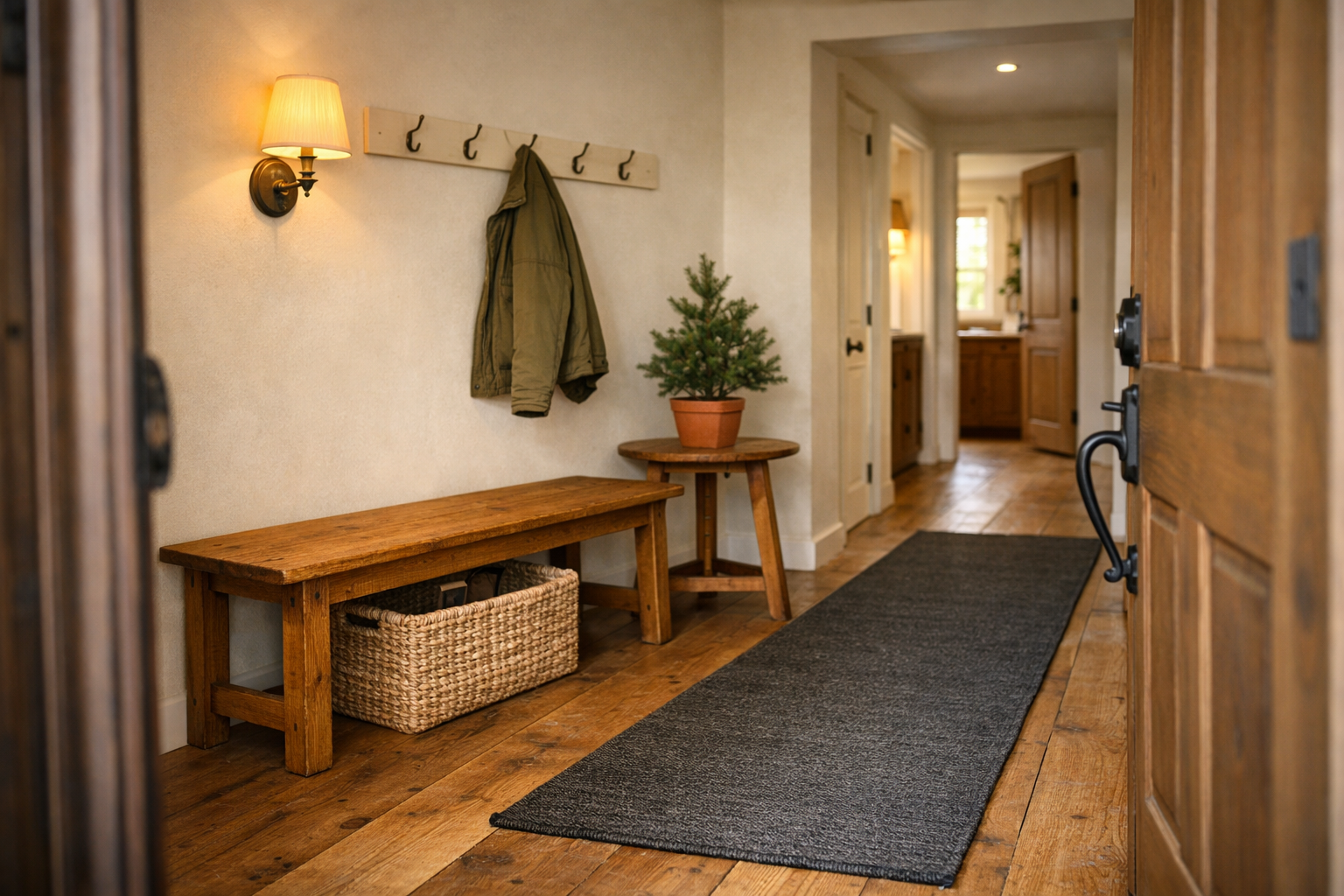
Staged Vermont farmhouse entry with warm lighting, wool runner rug, and clean hook rail — buyer-ready presentation

A staged Vermont entry: warm light, one rug, one hook, one basket. Everything the buyer's brain needs to say yes.

The moment buyers decide — and most sellers don't know it's happening

Buyers make an emotional go/no-go decision within 90 seconds of walking through the door. In Vermont's older home stock, the entry is almost always the first room they stand still in — which makes it the single highest-stakes staging moment in the house. One dim light and a boot pile is all it takes to plant doubt that follows them through every room.

Here's the quiet problem: sellers think buyers are rational. They think buyers will look past the entry, mentally redecorate, and evaluate the square footage on its merits. They won't. Buyer psychology doesn't work that way. The brain files the first impression before conscious thought kicks in — and it doesn't revise easily.

What buyers say when they leave a poorly presented entry: nothing. They say they "just didn't feel it." They ask if there's something structurally wrong. They come in at $30,000 below asking "to account for updates." They were never making a rational calculation. They were rationalizing a feeling that started eight feet inside the front door.

The quiet problem — what's actually turning people off

The failure isn't the size of the entry — it's the signal it sends. A cluttered, dim entry tells buyers that the house has been lived in hard and maintained lightly. Vermont buyers, accustomed to older home stock, are already scanning for deferred maintenance. The entry is where that scan starts. Don't give it ammunition.
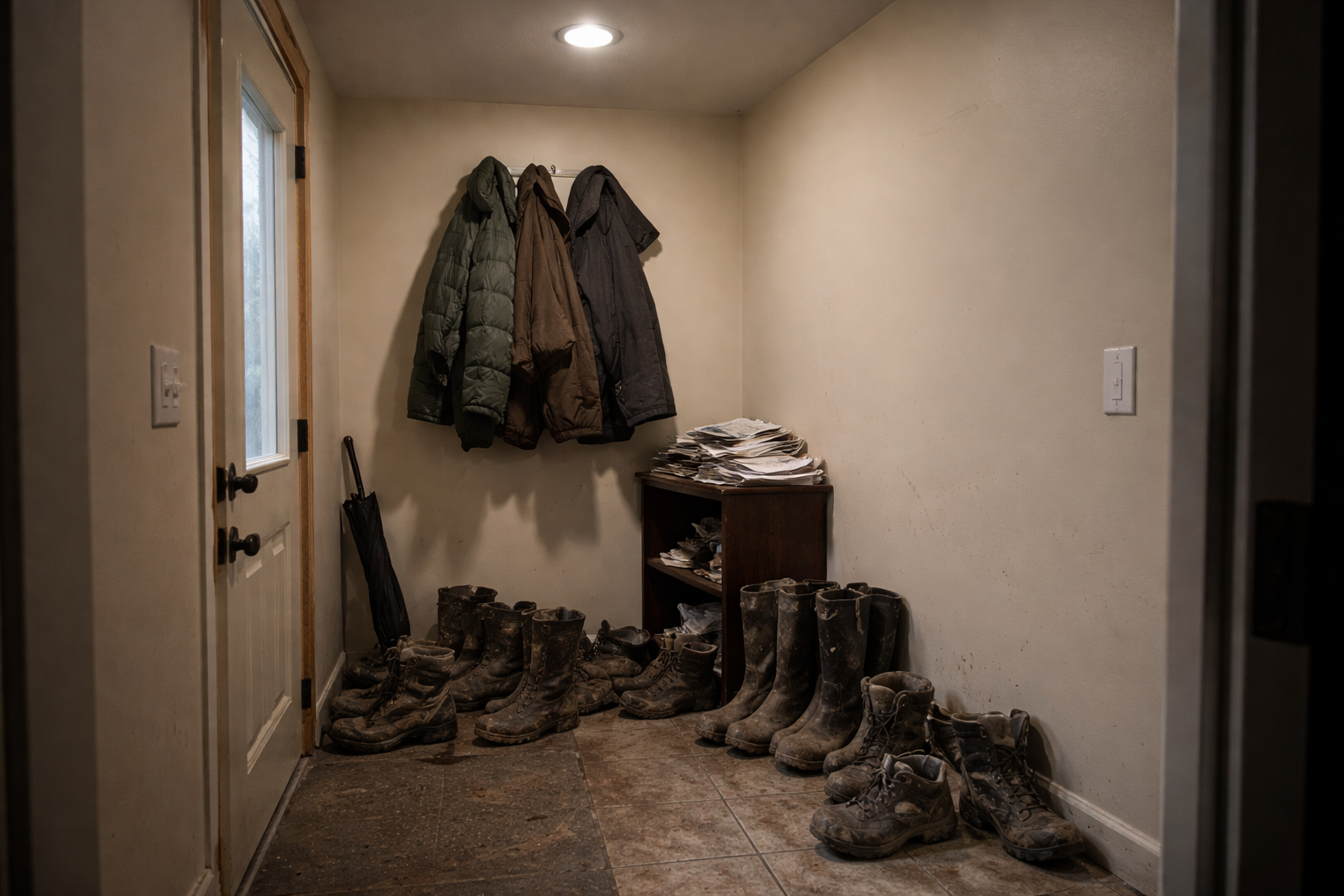
Cluttered Vermont home entry with boot pile, overloaded coat hook, dim lighting, and no focal point — common staging failure

This is what the buyer's brain files in the first 5 seconds. The rest of the showing starts at a deficit.

Central Vermont homes are often beautiful — wide-plank floors, original woodwork, proportions that newer construction can't touch. But the entry tells a different story. Four generations of coat hooks. A boot tray that long ago gave up trying. A light fixture bought when the Clinton administration was still young. These aren't crimes. But in listing photos, they're killers.

And here's the timing problem: mud season is six weeks out. Once March arrives, Vermont entries become a functional disaster zone — sand-tracked floors, wet boots multiplying, jackets that smell like February. Right now, in mid-February, is the last clean window to stage, re-photograph, and get ahead of it. Sellers who wait for "the market to pick up in spring" are staging for mud season. That's not a strategy. That's a hope.

The fix — three budget tiers, one weekend

Entry staging is the highest-ROI fix in a Vermont listing because the space is small, the changes are cheap, and the photography payoff is immediate. Buyers can't buy what they can't feel — and a warm, clear, focused entry gives them permission to feel good about everything that follows. Pick the tier that fits your timeline and wallet.
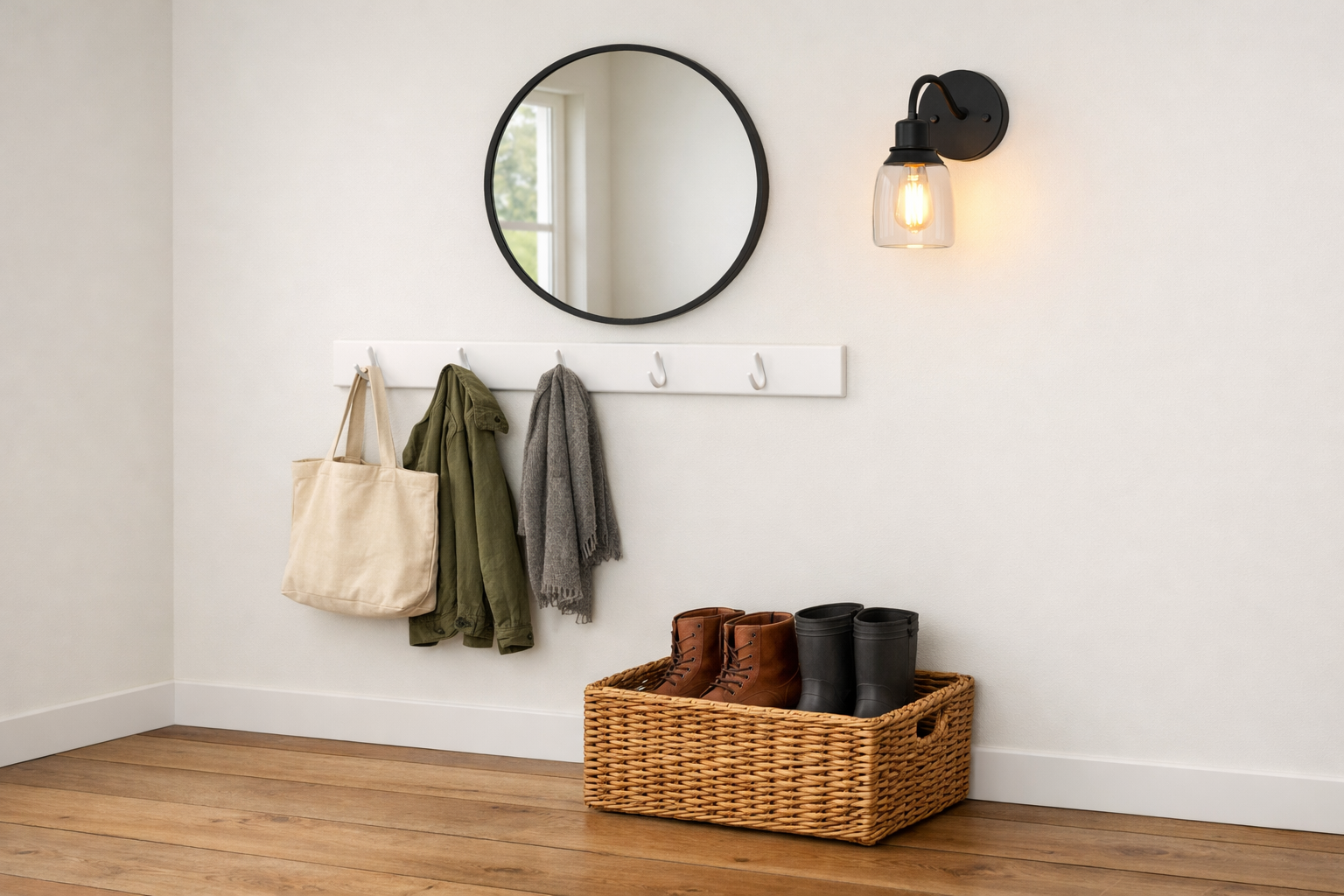
Budget-staged Vermont entry with clean hook rail, woven basket, round mirror, and warm sconce — affordable and sharp

The mid-tier fix: hook rail, basket, mirror, warm bulb. Total cost: under $300. Total impact: significant.

Budget Fix

Cost: $0–$150  ·  Time: One Saturday morning

Clear absolutely everything from the entry — every boot, every coat, every piece of mail, the umbrella stand nobody has touched since 2021. Then add back exactly one curated layer: a rug if you have one, or a single plant, or a basket. Nothing else. Replace the overhead bulb with a warm 2700K LED ($8 at any hardware store). If you have a mirror anywhere in the house, move it here.

What changes: listing photos go from "sad hallway" to "intentional space." Buyers walk in and their brain registers calm instead of chaos.

Mid Fix

Cost: $150–$400  ·  Time: One weekend

Add a simple hook rail if one doesn't exist — IKEA's HEMNES and Wayfair both carry clean options under $80 that install in 20 minutes. One woven or wire basket for "approved" boot storage. A small round mirror above it. Swap the light fixture if it's truly beyond saving (a simple matte black or brushed brass wall sconce runs $40–$120 and installs in under an hour). A small indoor plant — pothos, snake plant, a small evergreen — adds life without maintenance drama.

What changes: the entry now has a clear focal point, defined storage, and warmth. It photographs like a deliberate design decision, not an afterthought.

Do It Right

Cost: $400–$1,200  ·  Time: One to two weekends

If the entry floor is scratched or the walls are scuffed, address it now — a gallon of paint is $45 and an afternoon's work, and it changes everything in photos. A built-in bench with under-seat storage ($200–$600 depending on source) signals functional organization and photographs beautifully. For ski-area properties — Stowe, Mad River Valley, Sugarbush proximity — this investment pays back: buyers at that price point expect the mudroom to work as hard as the kitchen. If you're replacing the fixture, go warm and go good. A $120 fixture is not a luxury. It's a listing cost.

What changes: the entry becomes a selling point, not a deduction. Buyers stop mentally pricing out the fix and start imagining their skis hung there instead.

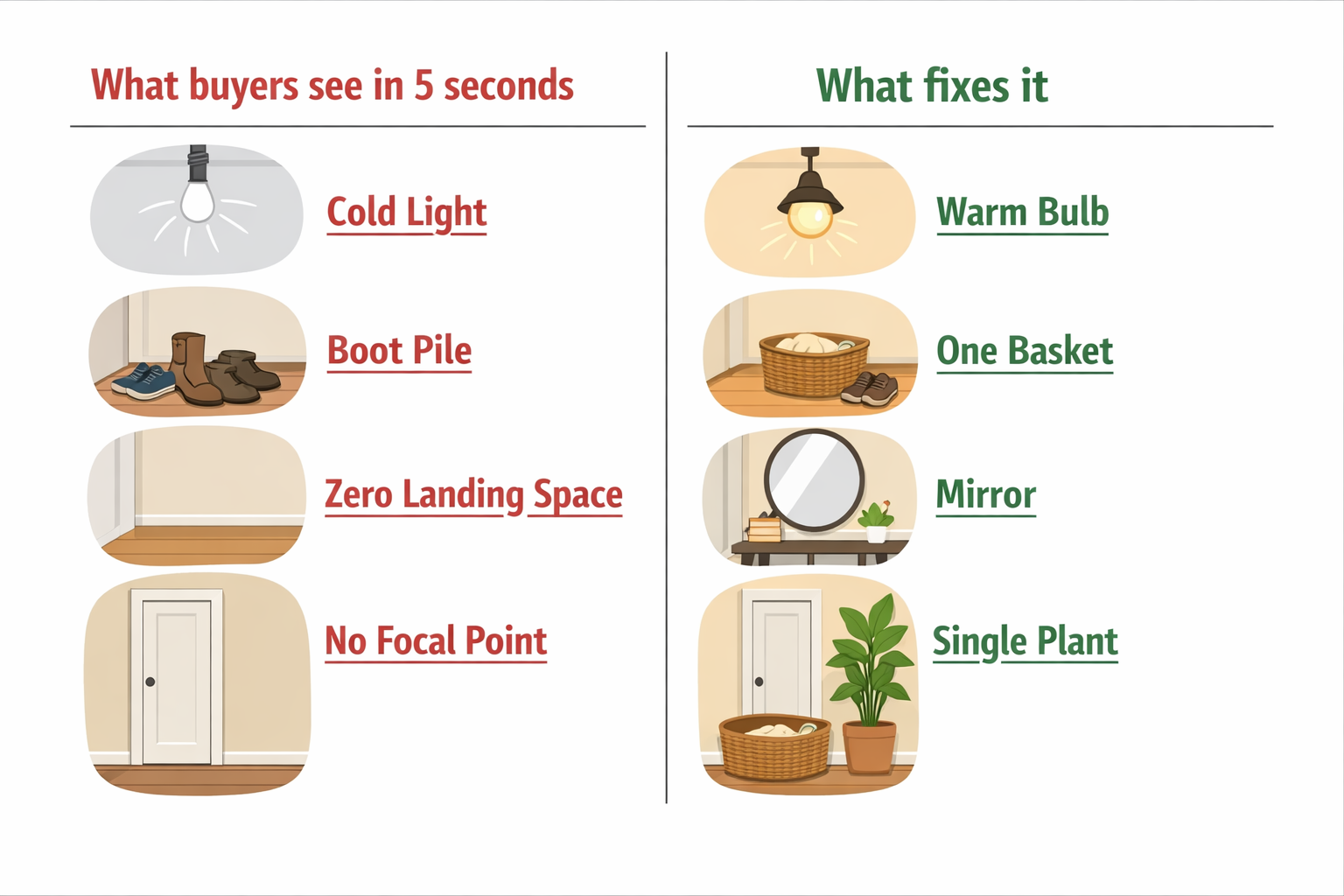
Diagram comparing 4 Vermont entry staging problems vs. 4 fixes: cold light, boot pile, no landing space, no focal point

The 5-second checklist. Four problems, four fixes. Most cost under $50 each.

Vermont context — why this hits harder here than anywhere else

Vermont's older home stock is disproportionately entry-challenged. Narrow doorways, low ceilings, original trim that's charming at the right scale and cramped at the wrong one — these are features, but only if they're not fighting against clutter and bad light. Vermont buyers also arrive in February wearing four layers and carrying the memory of ten other listings. Your entry is their reset button. Make sure it works.

Central Vermont's housing stock skews older — a lot of it pre-1970, much of it pre-1950. These homes weren't built with "mudroom as staging opportunity" in mind. They were built to survive February. The result is entries that function but don't perform: utilitarian, lit for the task at hand, optimized for boots-off efficiency rather than buyer psychology.

The seasonal timing compounds everything. Vermont's listing window gets serious in mid-February. Sellers who photograph in late February or early March are shooting in the worst light of the year — low sun angles, gray flat days, and the accumulated evidence of a long winter at the threshold. A few hours of entry staging before the photo shoot changes the entire frame. It's not just about the entry photo. Warm entry light spills into the surrounding shots. A clear entry makes the photographer's job easier in every room they can see from the door.

One more Vermont-specific wrinkle: buyers here are shrewd about old houses. They're not scared of them, but they're watchful. A cluttered, dim entry activates that watchfulness immediately — it feels like the beginning of a list. A clean, warm entry does the opposite. It says: this house has been cared for. That perception is worth real money in a market where days-on-market have stretched to 91 (per Redfin, January 2026) and sale-to-list ratios have slipped to 96.3%. The sellers closing cleanly right now are the ones who understand that buyer perception is the market.

Don't let the entry kill your sale

Buyers don't say "the entry was cluttered so we passed." They say they didn't feel a connection. They make an offer $25,000 below asking to "account for updates" they can't fully articulate. That feeling started eight feet inside your front door — and it followed them through every room.

You can stop that from happening. Less than $300 and one weekend. But the window is now — mud season is six weeks out, and once it arrives, your entry stops being a staging problem and starts being evidence.

  • Send us your listing photos and we'll give you a one-weekend action plan — no obligation, no sales pitch, just the honest triage.
  • Thinking about a price reduction? Don't drop the price until you fix the presentation. You'll discount far more than the staging ever would have cost.
  • Ready to list this spring? Now is the prep window. We work with sellers across Central Vermont to get the details right before the market heats up — so you launch strong instead of chasing buyers from behind.
Talk to Tony Walton — Principal Broker, New England Landmark Realty (NELR)

📞  Tony's Cell: (802) 233-4107
📞  Office: (802) 253-4711  or  (866) 324-2427
🌐  www.nelandmark.com

→ Download the Free Vermont Seller's Guide
→ Download the Free Vermont Buyer's Guide
Posted in Home Staging
March 3, 2026

The Listing That Stayed

A column by Harris Vexley

There was a house on Clement Road that sat on the market for two years, three months, and — if memory serves, and it mostly does — eleven days.

I know this because I showed it seventeen times. I counted. You start counting things like that when a listing gets personal, and that listing got personal somewhere around showing number six, when a retired schoolteacher from Barre walked through the kitchen, stopped, looked at me with an expression I can only describe as knowing, and said, "Harris, who are you trying to help here, exactly?"

I didn't have a good answer for that.

The house itself was fine. That was the problem, in a way. It was a cape, white, black shutters, good bones as we used to say — which is the real estate equivalent of describing a blind date as having a great personality. The lot was two and a half acres, mostly level, with a tree line on the north end that would have been genuinely beautiful if you weren't already thinking about other things. The seller had replaced the roof in '91. The well tested clean. The price was, by any reasonable standard, fair.

And yet.

In a town of twelve hundred people, and yet carries a lot of weight.

I won't tell you what everyone knew, partly because I'm not sure everyone knew the same thing, and partly because Vermont has a particular way of handling certain histories — which is to say, not handling them at all, but rather letting them settle like sediment until they become part of the geology. You don't discuss sediment. It's just there. It's been there. It will be there after you're gone.

What I will tell you is that every showing followed the same general pattern. People would arrive, usually from a bit of a distance — Montpelier, Burlington, once a couple from Middlebury who'd been looking for eighteen months and were starting to get philosophical about it. They'd walk the property with the particular optimism of people who have not yet made an offer on anything and therefore still believe real estate is a rational process. They'd nod at the roof. They'd approve of the lot. They'd stand in the kitchen and look out the window at the tree line.

And then, at some point in every single showing, they'd go quiet in a way that had nothing to do with contemplation.

"It's very peaceful," one woman said, which was technically true.

"Does it always feel this — " a man started, and then decided not to finish that sentence, which I respected.

The schoolteacher from Barre simply left without explanation, which I also respected, and which was, honestly, the most Vermont response possible.

The couple from Middlebury made an offer. I was surprised. They came back for a second look, walked through more slowly this time, and the husband stood in the back bedroom for a very long time. Then they withdrew the offer. We had a brief phone call. He said it wasn't the right fit. His wife could be heard in the background saying nothing at all, which told me everything.

It sold in the spring of 1994.

The buyer was from New Hampshire — Manchester, I believe — and he came alone, moved efficiently through the rooms, asked reasonable questions about the heating system and the septic, and signed the paperwork with the straightforward confidence of a man who had not grown up in a small town and therefore had no idea what he didn't know.

I have thought about that a lot over the years. Whether it was better or worse for him, not knowing. Whether the house noticed the difference.

Last I heard he lived there twenty years before retiring to Florida. No complaints on record. Sold it himself, eventually, to a young couple from Burlington who put in a new bathroom and started an Instagram account about rural life. They seem happy.

The house is just a house now. The sediment has had thirty years to settle.

Still. Some Tuesday mornings, driving Clement Road out of old habit, I slow down a little when I pass it. Not for any particular reason.

Just to see if it looks back.

Harris Vexley spent thirty years as a licensed real estate broker in Vermont. He is now retired, which mainly means he drives around more and talks to fewer people about it.

Where to Go Next

Talk With a Local Expert

New England Landmark Realty
Office: (802) 253-4711
Toll-Free: (866) 324-2427
Tony Walton Cell: (802) 233-4107
Website: https://www.nelandmark.com

March 2, 2026

Kitchen Remodels That Actually Work vs. Expensive Lies You're Told Will Add Value

Counter Intellegence March 2, 2026 | New England Landmark Realty

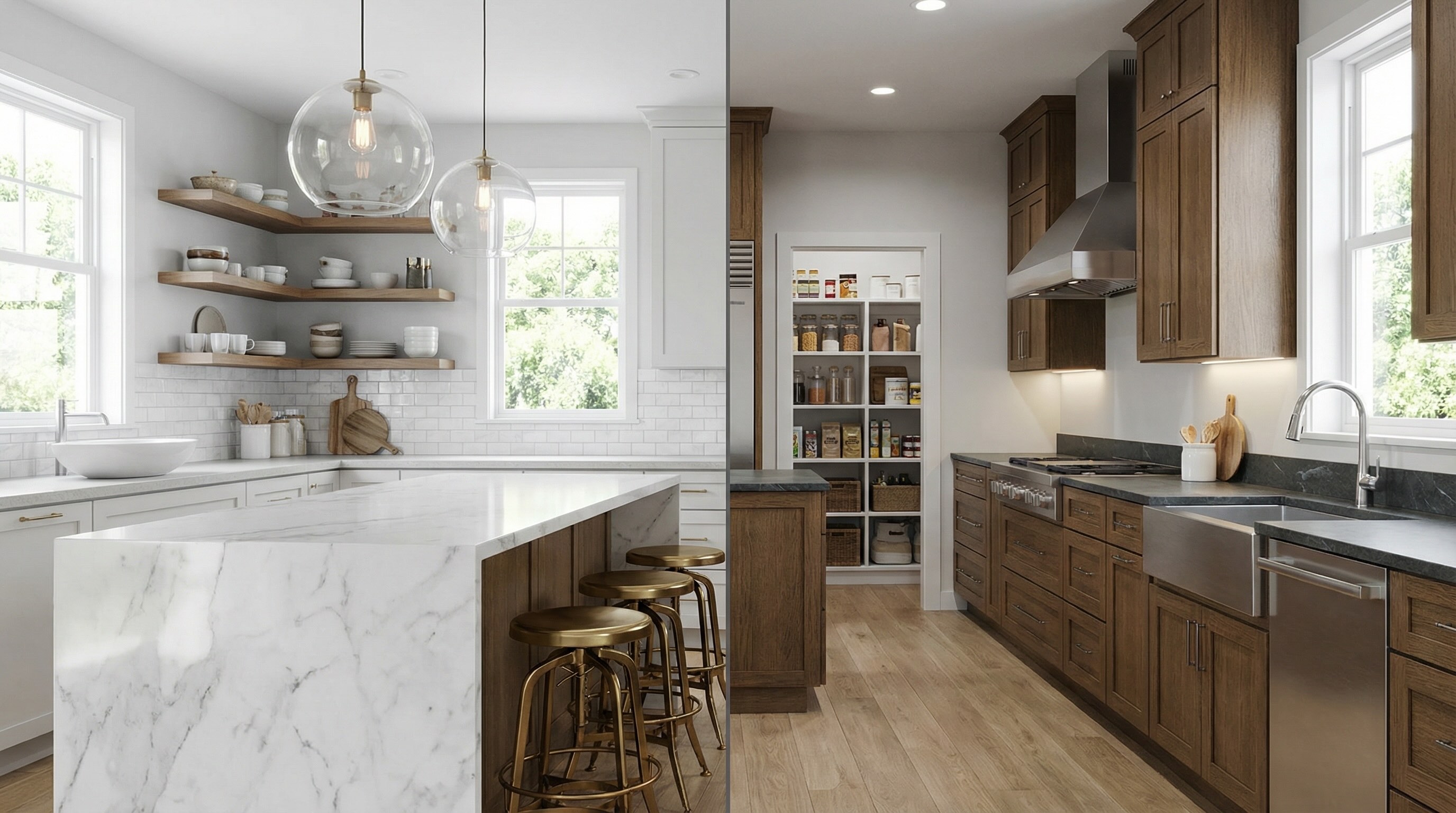
Split-screen comparison of two kitchens with identical budgets - one Instagram-perfect but dysfunctional with waterfall island and open shelving, the other understated but brilliantly functional with task lighting and proper storage
Same budget. Same footprint. Completely different priorities. One kitchen photographs well. The other one works.

I've walked through enough kitchen renovations—as a chef and as a broker—to recognize the pattern. Homeowner spends $90,000. Designer delivers a showroom. And six months later, the homeowner is still reaching into the back of a lower cabinet on their hands and knees looking for the Dutch oven because nobody thought about pull-out drawers.

Here's the problem: most kitchen renovations are designed for the listing photos, not for the human who has to cook Thanksgiving dinner in the damn thing.

Key Takeaways

Two-Sentence Summary

Most kitchen renovations chase resale value with granite and subway tile while ignoring the design choices that actually make cooking easier—and those functional fixes often cost less than the cosmetic theater. This guide separates the upgrades that earn their keep every single day from the expensive lies that look good in listings but fail in real life.

If You Only Remember 3 Things

  • Countertop material doesn't make you a better cook—counter location does. The 15 inches of landing space next to your range matters more than whether it's quartz or butcher block.
  • Storage you can reach beats storage that looks good. Pull-out drawers cost more than fixed shelves but pay dividends every single time you don't have to crawl on the floor to find a pot.
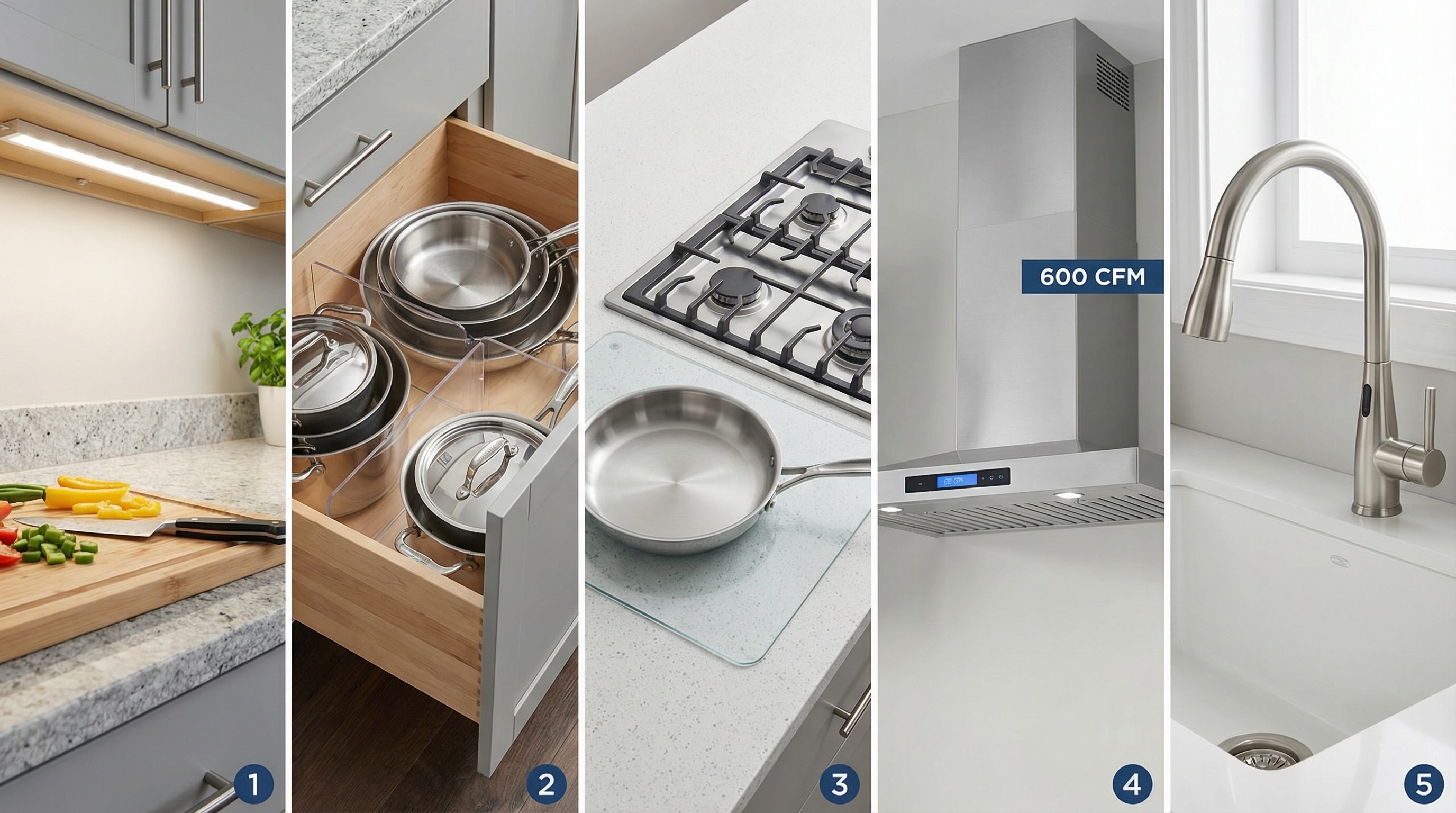
  • Lighting is the cheapest upgrade with the highest functional return. Under-cabinet LEDs and task lighting transform how you work—no one has ever said "this kitchen is amazing" because of the backsplash alone.

Quick Facts

  • Functional upgrades like task lighting and drawer storage typically cost 15-30% less than cosmetic statement pieces like waterfall islands
  • Proper range hood ventilation (600+ CFM) prevents long-term moisture damage that can cost $15,000-$40,000 to remediate in Vermont's humid climate
  • Landing space geometry (18 inches on either side of cooktop, 15 inches beside the sink) is dictated by the National Kitchen & Bath Association and affects daily usability more than any finish material

Why This Matters

Most kitchen renovations optimize for the wrong scorecard—resale value and Instagram aesthetics instead of daily function. The result: expensive choices that photograph beautifully but collapse under the demands of actual cooking. Buyers notice layout and light before they notice countertop material. Homeowners live with poor workflow every single day.

The renovation industrial complex wants you to believe that kitchen value lives in the material palette. Granite versus quartz. Shaker versus flat-panel. Subway tile versus zellige.

None of that matters if you can't fit a sheet pan on the counter next to the oven.

I've shown $800,000 homes with $120,000 kitchens that couldn't pass a basic workflow test. Gorgeous waterfall islands with nowhere to plug in a stand mixer. Six-burner ranges with 8 inches of counter space on one side and a wall on the other. Pendant lights that look incredible and cast shadows exactly where you're trying to chop onions.

Meanwhile, I've stood in 1970s kitchens with Formica counters and builder-grade cabinets where everything just worked. Because someone—probably the homeowner who actually cooked in it—prioritized task over trophy.

The Expensive Lies: Upgrades That Photograph Well But Work Poorly

Five renovation darlings that add cost without improving function: waterfall islands that sacrifice landing space, open shelving that demands curation over capacity, pro-style ranges that outpace actual cooking needs, vessel sinks that splash and fail, and wine fridges installed by default instead of intent. Each one looks great in the listing. None of them survives daily use without compromise.
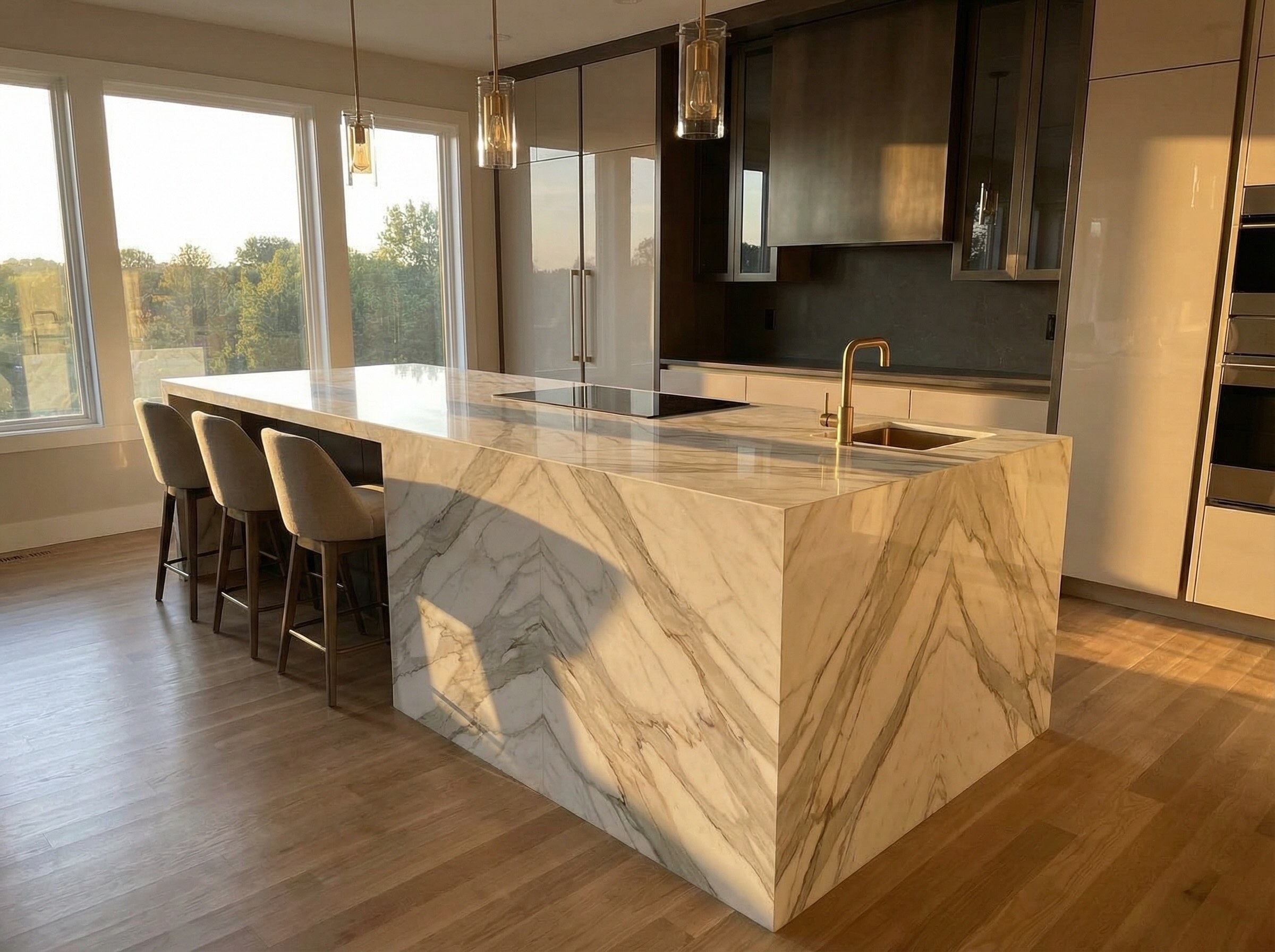
Luxury kitchen with stunning waterfall marble island showing design flaws - no outlets, inadequate landing space next to cooktop, impractical bar-height seating, and shallow prep sink
$12,000 of book-matched marble. Zero electrical outlets. Eight inches of landing space next to a 36-inch cooktop. Beautiful and completely impractical.

Waterfall islands. Stunning. Expensive. And almost always designed to showcase the stone rather than facilitate the work. The vertical edge eats counter depth. The statement steals budget from things that matter—like making sure you have 36 inches of clearance on the working side or enough space to pull out a chair without blocking the dishwasher. Cost: $3,000-$12,000 depending on material. Functional return: zero.

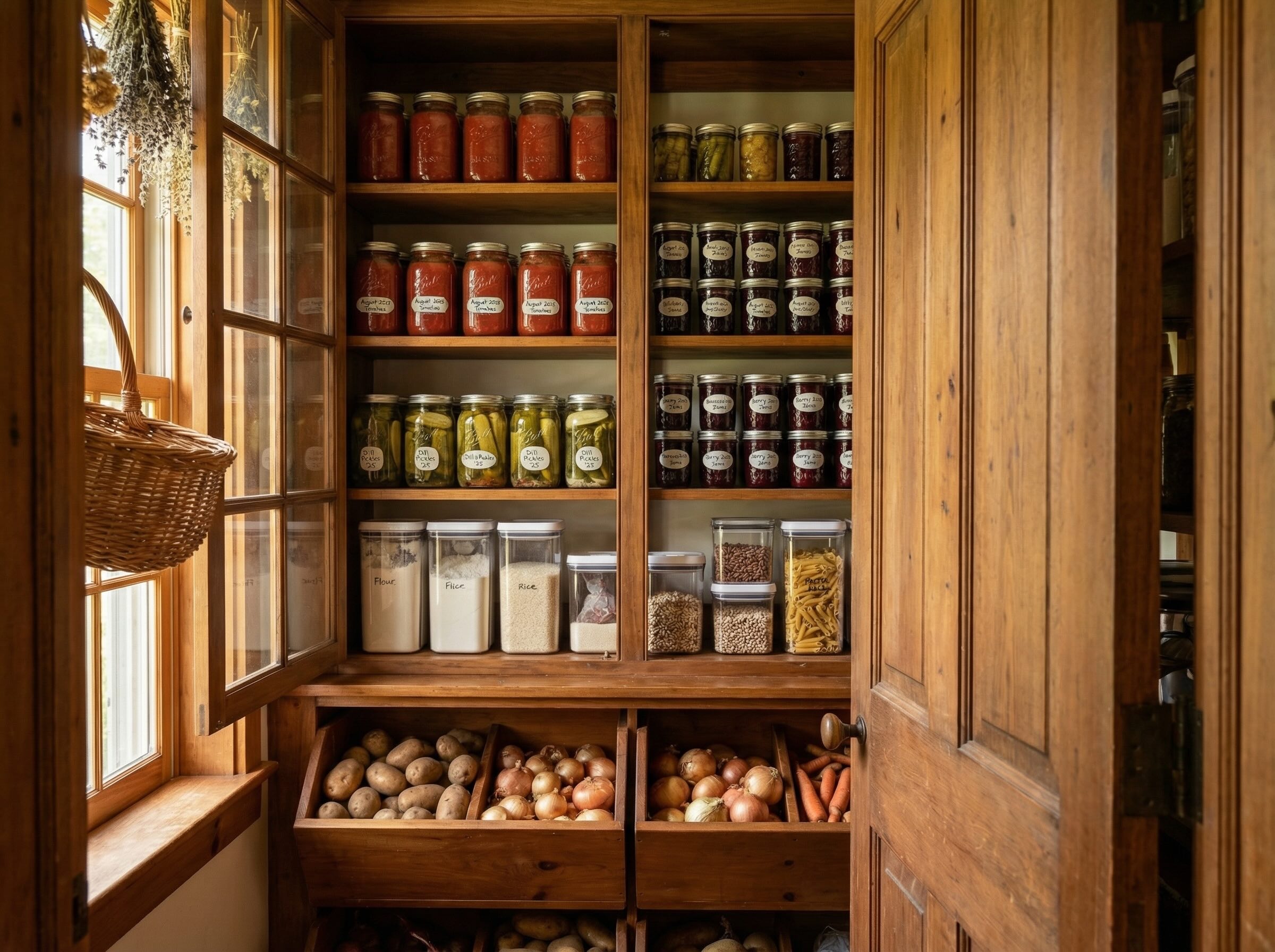
Open shelving. The Instagram aesthetic that only works if you (a) own six plates, (b) never cook anything that splatters, and (c) enjoy dusting. Vermont kitchens manage preserving season, bulk staples, and gear that doesn't see daily use. Open shelving is beautiful because it forces minimalism. Minimalism doesn't survive August when you've got 40 pounds of tomatoes to process and nowhere to put the canning supplies. Cost: often cheaper to install. Hidden cost: the storage you'll have to add later when you realize you have nowhere to put anything.

Pro-style ranges. Unless you're actually cooking for 12 people on a Tuesday night, that 48-inch, six-burner Viking is cosplay. You'll use two burners 90% of the time. What you will notice: the BTU output that demands a makeup air system (add $2,000-$5,000), the commercial depth that eats into your workflow triangle, and the cleaning regimen that makes you nostalgic for sealed burners. Cost: $8,000-$15,000 for the range alone. Better move: a 30-inch range with one high-BTU burner and the other $8,000 spent on lighting, storage, and ventilation.

Vessel sinks. Gorgeous in the showroom. A nightmare in year two when the faucet can't reach the edges, every hand-washing session sprays the counter, and you realize you can't fit a stockpot under the spout. Cost: $400-$2,000. What works instead: a deep undermount that disappears visually and handles a full sheet pan.

Wine fridges as default. If you drink wine twice a month, you don't need a 46-bottle dual-zone climate-controlled monument to aspiration. You need a drawer. Or a shelf. Or nothing. Cost: $1,200-$4,000. Opportunity cost: the base cabinet with pull-outs that you actually needed.

The Quiet Winners: Upgrades That Make You Faster, Safer, Smarter

Seven functional improvements that earn their cost every single day: task lighting that eliminates shadows, landing space geometry that prevents burns and breaks, deep drawer storage that ends the cabinet crawl, proper ventilation that protects your investment, dedicated circuits that prevent breaker trips, correctly placed pot fillers, and resilient flooring that survives dropped cast iron. These are the upgrades nobody photographs and everyone uses.
Five functional kitchen upgrades shown in detail - LED under-cabinet task lighting, organized pull-out drawer with pots, proper counter landing space beside range, range hood with 600 CFM rating, and motion-sensor faucet over deep sink
The upgrades that don't make the magazine covers but improve your life 400 times a year: light where you work, storage you can access, space where you need it, ventilation that protects the structure, and a sink that fits the tools.

Task lighting. Under-cabinet LEDs, toe-kick lights, and pendant fixtures positioned over work zones, not over voids. This is the single cheapest upgrade with the highest daily return. You cannot dice an onion in a shadow. Cost: $400-$1,500 depending on quality and coverage. Value: every single time you cook after sunset, which in Vermont is 4:30 PM for four months of the year.

Landing space geometry. Not negotiable. Eighteen inches on either side of the cooktop. Fifteen inches beside the sink. Twelve inches beside the fridge. These aren't Instagram guidelines—they're the physics of not dropping a hot pan or a full pot on your foot. If your designer is arguing with these numbers, find a different designer. Cost: $0 if planned correctly. Cost if ignored: the $90,000 kitchen that doesn't work.

Drawer storage with full-extension glides. Fixed shelves in base cabinets are where pots go to die. You will never willingly crawl into a 24-inch-deep hole to retrieve a roasting pan. Drawers bring the back to the front. Cost: $150-$400 per drawer depending on size and hardware. ROI: measured in dignity and time saved per retrieval.

Ventilation that actually moves air. Your range hood needs to move at least 600 CFM if you have a gas range, 400 CFM minimum for electric. That's cubic feet per minute—the measure of how much smoke, grease, and moisture gets pulled out instead of settling on your cabinets and walls. In Vermont, where winter cooking happens in a sealed box, inadequate ventilation isn't just annoying. It's structural rot waiting to happen. Cost: $800-$3,000 for a hood that works. Cost of ignoring it: $15,000-$40,000 in moisture remediation five years later.

Dedicated 20-amp circuits. One for the microwave. One for the countertop appliances (mixer, blender, toaster). Your renovation electrician will know this. Your designer might not ask. If you're running a stand mixer and a kettle at the same time and tripping breakers, you skipped this. Cost: $250-$500 per circuit during renovation. Cost after the fact: $800-$1,500 plus drywall repair.

Pot filler—placed correctly. This isn't about luxury. It's about not carrying 16 pounds of water and pasta pot across the kitchen. But only if it's within arm's reach of the range and you have landing space below it. A pot filler over an island cooktop with no counter space is performance art, not infrastructure. Cost: $400-$1,200 installed. Worth it: only if the geometry supports it.

Flooring with resilience. Cork, luxury vinyl plank, or engineered hardwood with a real wear layer. Ceramic tile is beautiful and unforgiving—drop a wine glass and it's over. Drop a cast-iron skillet on tile and you've got a cracked tile and a damaged pan. Vermont floors also contend with snow melt, mud season, and the grit that comes in on boots. Cost: $6-$15 per square foot installed depending on material. The test: what happens when you drop something heavy.

The Middle Ground: Upgrades That Do Both (If You Spec Them Right)

Three renovation choices that deliver both function and visual appeal—but only with chef-level planning: islands with proper dimensional discipline, double ovens for households that actually bake, and pantry buildouts that prioritize volume over aesthetics. The difference between success and expensive regret is in the details that most designers skip.

Islands. They work if you follow the rules. Four feet of length minimum (preferably five). Fifteen inches of overhang if you want seating. Thirty-six to forty-two inches of clearance on all working sides. Electrical outlets on the ends or pop-ups in the surface, not hidden underneath where you'll never use them. An island that ignores these specs is just an expensive obstacle. Cost: $3,000-$15,000 depending on size, material, and features. Functional return: high, but only if the geometry is right.

Double ovens. If you bake bread, roast vegetables, and need to run two different temperatures simultaneously—or if Thanksgiving involves more than one oven-based dish—this is defensible. If you're buying it because it "looks professional," you're spending $4,000-$8,000 on something you'll use twice a year. The test: how many times in the last three months did you wish you had a second oven? If the answer is zero, you don't need one.

Pantry buildouts. A floor-to-ceiling cabinet with pull-out shelves or a walk-in pantry with adjustable wire racks will change your life. But only if you prioritize depth, adjustability, and capacity over looking tidy. A "butler's pantry" with glass-front cabinets and decorative tile is for people who don't cook. A working pantry has closed doors, deep shelves, and room for a 25-pound bag of flour. Cost: $2,000-$8,000 depending on configuration. ROI: every time you don't have to drive to the store because you actually have space to stock staples.

Vermont Context: What Cold, Mud, and Maple Season Do to Your Choices

Three Vermont-specific realities that change the renovation math: closed storage beats open shelving in a climate with real humidity and pest pressure, heating integration matters when kitchens are cold voids or overheated saunas, and the kitchen-mudroom threshold determines whether your floors survive winter. Design for the place you actually live, not the place in the magazine.
Well-organized Vermont kitchen pantry with deep shelves loaded with Ball jars of preserves, bins of root vegetables, bulk dry goods in airtight containers, and closed cabinet doors
This is what Vermont food infrastructure looks like in August. Closed storage. Serious capacity. Room for 40 quarts of tomato sauce and the 50-pound bag of flour you bought at Costco in October.

Closed storage isn't optional. Vermont has humidity. And moths. And field mice that would very much like to winter in your open-shelf pantry with the artfully arranged jars of lentils. If you cook from the garden, preserve, or buy in bulk, you need closed cabinets with actual capacity. Open shelving works in Los Angeles. It's a liability here.

Heating integration. If your kitchen is an addition or bump-out, make sure the HVAC plan accounts for it. I've seen $100,000 kitchens that are 58 degrees in January because the designer focused on the pendant lights and forgot to add a heating zone. Radiant floor heat is glorious. Forced air works if the ducts are properly sized and placed. Either way, verify the plan before the walls close up.

Mudroom threshold. Vermont kitchens need a hard boundary between "outside dirt" and "cooking space." Whether that's a dedicated mudroom, a tiled entry zone, or a boot bench with a drain tray, plan for the transition. Your beautiful hardwood floors will thank you. Cost: $500-$3,000 depending on scope. Value: the floor you don't have to replace in five years.

The Renovation Hierarchy: How to Spend $30K vs. $80K vs. $150K

Budget tiers with functional priorities at each level: $30K fixes workflow and appliances, $80K adds quality materials and custom storage, $150K buys space reconfiguration and premium everything. At every level, the rule is the same—invest in the invisible systems first, the visible finishes last. Skip the upgrades you won't use weekly. Never cheap out on ventilation, lighting, or structural work.

$30,000 budget: Paint cabinets or reface them. Replace countertops with quartz or butcher block (skip the exotic stuff). Upgrade to a good range hood (600 CFM minimum). Add under-cabinet LED lighting. Replace the sink and faucet with workhorses (undermount sink, pull-down faucet). Install pull-out shelves in existing base cabinets. One good appliance upgrade—either the range or the refrigerator, whichever is failing. This budget doesn't buy you a showroom. It buys you a kitchen that works better than it did.

$80,000 budget: Everything above, plus new cabinets (not custom, but quality stock with soft-close hardware). Rework the layout if the footprint allows (add an island, improve the triangle, fix the landing space problems). Upgrade both the range and refrigerator. Add a pantry if you don't have one. Invest in real task lighting—not just under-cabinet strips, but strategically placed pendants and recessed cans. Solid flooring—engineered hardwood or luxury vinyl plank that'll last 20 years. At this level, you can have some visual personality (tile backsplash, cabinet details), but function still leads.

$150,000+ budget: Now you're buying space and systems. Move walls if the flow is broken. Add square footage if the kitchen is too small. Custom cabinetry with drawer organizers, pull-out spice racks, and appliance garages. Premium appliances across the board—but spec'd for how you actually cook, not for the brand badge. A proper pantry—walk-in if space allows. Stone counters if you want them (but seriously consider butcher block for work zones). High-end lighting design with dimmers and zones. And you still prioritize ventilation, electrical, and storage before you prioritize the statement tile.

What to never cheap out on: Ventilation, electrical, plumbing rough-in, structural work, and cabinet hardware (soft-close hinges and full-extension glides). These are the bones. If the bones are wrong, the skin doesn't matter.

What to defer: Exotic tile, high-end appliance packages you won't use, furniture-quality cabinetry in a basement or rental.

What to skip entirely: Anything you can't name a weekly use case for. If the answer to "when will I use this?" is "when we entertain," and you entertain twice a year, strike it from the budget.

Bottom Line: The 3-Question Test Before You Sign Anything

If your designer, contractor, or architect can't answer these three questions with specifics, walk away: Does this make a particular task easier, and which one? Will I use this weekly or just show it off once? What's the Vermont failure mode—cold, humidity, rodents, dust, or something else? Function earns its cost every day. Theater earns it never.

Question 1: Does this make a specific task easier? Which one? If the answer is vague ("it'll make the kitchen feel more open") or aesthetic ("it's a stunning focal point"), it's not a functional upgrade. Push for specifics. "This adds 18 inches of landing space next to the range so you're not balancing a hot pan on the corner of the sink" is a real answer.

Question 2: Will I use this weekly, or just show it off once? Pot filler you'll use weekly if you make pasta, stock, or soup regularly. Wine fridge you'll show off when guests visit twice a year. Be honest about the cadence. Weekly use justifies cost. Annual use does not.

Question 3: What's the Vermont failure mode? Open shelving fails in humidity and dust. Inadequate ventilation fails in moisture damage. Poor heating design fails in frozen pipes. Exotic tile fails when you drop a cast-iron pan. If your designer can't name the climate-specific risk and the mitigation strategy, they're not designing for Vermont. They're designing for a magazine.

Planning a Kitchen Renovation—Or Evaluating One?

I've walked through hundreds of Central Vermont kitchens as a chef and as a broker. I know what works, what fails, what costs too much, and what pays back. Whether you're planning a remodel or trying to figure out if the kitchen in that listing is worth the asking price, let's talk.

Contact Tony Walton
Principal Broker, New England Landmark Realty
Cell: (802) 233-4107
Office: (802) 253-4711 or (866) 324-2427
www.nelandmark.com

Helpful Resources:
Vermont Home Buying Guide | Selling Your Vermont Home

Where to Go Next

Posted in Design Build
Feb. 22, 2026

39 Million Homeowners Locked Below 5%—What Vermont Sellers Need to Know


By The Numbers Guy | February 5, 2026

Thirty-nine million U.S. homeowners still hold mortgage rates below 5%, and only 6% gave up those rates in 2025—but Vermont home prices rose 5.8% last year to a median of $385,000, meaning sellers sitting on low rates are also sitting on significant equity gains. If you're a Vermont homeowner weighing whether to sell now or wait for rates to drop further, the math suggests that waiting may cost you more than moving does.

If You Only Do 3 Things

  1. Calculate your equity gain: If you bought before 2022, your Vermont home likely appreciated 15–25% or more—run the numbers on what you'd net after sale.
  2. Model your next purchase payment at 6%: A 6% rate isn't 3%, but it's workable if your equity covers a larger down payment or the home you actually want.
  3. Get a professional market analysis: Early 2026 sellers have negotiating power before competition ramps up—but that advantage shrinks as more sellers test the market in March–April.
Vermont home with For Sale sign in late winter with mountains in background during golden hour
Early 2026 sellers have a window—but it won't stay open forever.

What Changed (and the One Number That Matters)

Direct Answer: Thirty-nine million U.S. homeowners still hold mortgage rates below 5%, and last year only 6% of them gave up those rates to sell or refinance (ICE Mortgage Technology, February 2026). In Vermont, that lock-in effect is colliding with a 5.8% year-over-year price increase—meaning your low rate is valuable, but so is the equity you've built. The trade-off: hold the rate and stay put, or sell now and use your gains to buy what you actually need at 6%.

Let's run the numbers.

If you locked in a rate below 4% anytime between 2020 and early 2022, that rate feels like a golden handcuff. You're not wrong. Math doesn't care about feelings, but it does care about opportunity cost.

Here's what the data tells us: CNBC reported this week that roughly 39 million homeowners nationwide are sitting on rates below 5%. Another 12 million are below 3%. Last year, only about 6% of those folks sold or pulled cash out. Translation: 94% stayed put.

In Vermont, that same psychology is playing out—but with a wrinkle. While the rest of the country saw modest or flat appreciation, Vermont's median sale price hit approximately $385,000 by year-end 2025, up 5.8% from 2024. If you bought in Central Vermont in 2020 for $300,000, you're likely sitting on $385,000 to $400,000+ in value today. That's real money.

The Data (What the Numbers Actually Say)

Direct Answer: Three numbers define the decision: 39 million homeowners below 5% (the lock-in cohort), a Vermont median price of $385,000 (up 5.8%), and a current 30-year mortgage rate around 6.10%. For a Vermont seller who bought at $300,000 in 2020 with a 3.5% rate, selling now and buying a $450,000 home at 6% with $100,000 down (from equity) yields a monthly payment around $2,098—higher than the old $1,347, but you're in the home you want, not the home you settled for.
Infographic showing 39 million homeowners below 5 percent mortgage rates, only 6 percent sold in 2025, Vermont median price 385K
The lock-in effect is real—but so is Vermont's equity surge.

Here are the three numbers that matter:

1. Thirty-nine million homeowners hold rates below 5%. That's the national baseline. According to ICE Mortgage Technology and reported by CNBC on February 4, 2026, this cohort represents the vast majority of homeowners who refinanced or bought during the 2020–2021 rate environment. They're not moving unless forced.

2. Vermont's median sale price is approximately $385,000, up 5.8% year-over-year. That's from year-end 2025 data compiled by Vermont brokerages including Catalyst Realty. In Central Vermont specifically, some towns are seeing medians closer to $400,000 or higher. If you bought before the surge, you've captured that gain—but only on paper until you sell.

3. The current 30-year fixed mortgage rate is around 6.10%. As of late January 2026, Freddie Mac's Primary Mortgage Market Survey pegged the average 30-year fixed rate at 6.10%, down from over 7% a year ago. That's not 3.5%, but it's also not 8%. It's workable—especially if you're bringing $80,000 to $120,000 in equity to the table.

Translation: If you're sitting on a $300,000 home you bought in 2020 at 3.5%, your monthly principal and interest payment is roughly $1,347. If you sell that home today for $385,000, net $100,000 after costs, and buy a $450,000 home at 6% with 20% down ($90,000), your new payment is approximately $2,098. That's $751 more per month.

But here's the question nobody's asking: Is the $300,000 home still the home you want? Or are you staying because the rate feels too good to give up?

So What Does That Mean for Vermont?

Direct Answer: Vermont's inventory rose 11.7% in late 2025 as more sellers tested the market, but transaction velocity remains slow because most buyers are also locked-in sellers who haven't made the leap yet. If you sell in early 2026—before spring competition peaks—you'll face fewer competing listings and can negotiate from strength. Wait until April or May, and you're swimming in a more crowded pool. The math favors moving now if the equity allows you to buy what you need, not just what you can afford.
Vermont homeowner sitting at kitchen table with calculator and mortgage paperwork, contemplating selling decision
The decision isn't about the rate—it's about the home.

Vermont operates on its own rhythm. Inventory traditionally drops in winter, then surges in March and April as sellers prep for the spring market. In 2025, inventory rose 11.7% by November—a sign that more homeowners were willing to test the waters. But sales velocity stayed slow. Why?

Because the buyers are also sellers. They're locked in at 3.5% or 4.25%, and they're doing the same math you are. The breakthrough happens when someone says, "I'm leaving money on the table by staying in a home I've outgrown."

Here's the Vermont-specific angle: If you list in February or early March 2026, you're ahead of the spring rush. Buyers who are serious right now aren't window-shopping—they're committed. You'll face less competition from other sellers, and you can price strategically without getting undercut by ten other listings in your zip code.

Wait until late April, and you're one of forty listings in a five-town radius. The advantage evaporates.

The other factor: Vermont's equity gains are sticking. Unlike some sunbelt markets where prices spiked then corrected, Vermont's appreciation has been steady and supported by real demand—remote workers, second-home buyers, and retirees who want land and access to outdoor life. That demand isn't reversing. Your equity is real.

Bottom Line (The Gain Frame)

Direct Answer: Holding a 3.5% rate on a home you've outgrown isn't financial discipline—it's inertia. If your Vermont home has gained $80,000+ in equity and you can use that to buy the home you actually want at 6%, the higher rate is the cost of getting your life unstuck. Run the numbers with a professional, model the payment, and decide whether you're staying for the right reasons or just because the rate feels too good to lose.

That 3.5% rate isn't a golden ticket. It's a sunk cost.

If the home still works—if the bedrooms fit your family, if the commute makes sense, if the town is where you want to be—then by all means, hold the rate. But if you're staying because you can't stomach giving up 3.5%, you're making a $750-per-month decision that's costing you quality of life.

Here's the play if you're a Vermont seller:

Step 1: Calculate your net proceeds. Take your current estimated home value (use Zillow, Redfin, or get a professional comparative market analysis). Subtract 6–8% for closing costs and commission. That's your equity war chest.

Step 2: Model your next purchase at 6%. Find the home you want. Run the mortgage payment at 6.10% with your equity as the down payment. If the payment is workable, you've just bought permission to move.

Step 3: List before the spring surge. February and early March sellers in Central Vermont have leverage. Use it.

The math won't get dramatically better if you wait. Rates may drop another quarter-point by summer—maybe. But Vermont inventory will definitely rise, and your negotiating position will definitely weaken. The window is open now. It won't stay open.

What to Do Next

If you're a Vermont homeowner sitting on equity and a low rate, the first step is to stop guessing and start calculating. A professional comparative market analysis can show you what your home is worth today—not what Zillow thinks, but what buyers in your town are actually paying.

From there, model the next move. What does a 6% payment look like on the home you want? What's the monthly cost of staying versus moving? Most importantly: What's the cost of staying in a home that no longer fits?

The 39 million homeowners locked below 5% aren't all making the wrong choice. But some of them are staying for the wrong reasons. Don't be one of them.

Contact New England Landmark Realty:
Office: (802) 253-4711 or (866) 324-2427
Tony's Cell: (802) 233-4107
Website: www.nelandmark.com
Vermont Home Buying Guide | Selling Your Vermont Home

Where to Go Next

Sources

Posted in Numbers Guy